Monday, January 5, 2026

Cops, mandarins and shirkers’ motto

Tuesday 6th January, 2026

The scourge of narcotics has eaten into the vitals of many institutions. Among those arrested and prosecuted for drug-related offences are some state employees including police officers. The proliferation of dangerous drugs has therefore come as no surprise. Juvenal’s famous rhetorical question comes to mind: “Who guards the guards?”

Thankfully, the police officers involved in the drug trade run the risk of having to face the full force of the law in case of being found out. The Police Department is considered one of the most corrupt state institutions in this country, but it makes a serious effort to rid itself of drug dealers among its members.

About 500 police officers are facing disciplinary action over drug-related offences, according to IGP Priyantha Weerasooriya. It is a matter of relief that the Police Department takes action against its own members. The Police Chief is reported to have said at a recent passing-out ceremony at the Sri Lanka Police College grounds in Anuradhapura that a considerable number of police officers have been dismissed for drug offences. This kind of self-correcting culture is rare in state institutions and should therefore be appreciated.

However, it is not only bad cops in the pay of drug dealers and other criminals who are suspended; good cops who courageously carry out their duties and functions and rile the politicians in power in the process also face disciplinary action or even termination instead of commendations and promotions.

The deplorable manner in which the police bigwigs throw their subordinates under the bus to appease their political masters has had a crippling impact on the morale of the police. One may recall the predicament of three police officers who took part in a raid on a cannabis plantation recently in Suriyakanda. The land where cannabis plants were found reportedly belongs to a family member of a ruling party MP, who together with a group of his party supporters set upon one of the police officers. The victim was hospitalised. The other officers were transferred. The police at the behest of their top brass unashamedly went so far as to arrest the assault victim and not the MP and his goons! Worse, the victim was suspended from service.

It has been reported that addressing the newly commissioned police officers at the aforementioned ceremony, Minister of Public Security Ananda Wijepala and IGP Weerasooriya emphasised the importance of professionalism, integrity and dedication for building a successful career in the police service. But in reality, these attributes alone do not help state officials achieve their career goals. The Acting Auditor General was overlooked when President Anura Kumara Dissanayake submitted nominees for the post of Auditor General to the Constitutional Council. He is the most eligible officer to head the National Audit Office, but he lacks what state officials need to secure top posts—political backing, which takes precedence over educational and professional qualifications and seniority in the public service.

A minister has come under a social media piranha attack, as it were, for referring to what may be described as an anti-effort workplace maxim: “More work, more trouble; less work, less trouble, and no work, no trouble.” What ails the state service is encapsulated in this one-liner, which is popular among shirkers in the public sector. It is only natural that ‘quiet quitting’ has become the norm in the highly-politicised state service where pleasing politicians is the way to climb the career ladder, as is public knowledge.

Many police officers have chosen to follow the aforesaid shirkers’ motto to avoid trouble. This may explain why a group of police officers just looked on while the JVP/NPP members were parking their buses in undesignated sections of the southern expressway on their way to the JVP’s May Day rally last year. If they had taken any action against the transgressors, they would have been transferred to faraway places.

It is only wishful thinking that a country without an independent state service can achieve progress.


from The Island https://ift.tt/1h7nUYP

Sunday, January 4, 2026

Minister accuses wildlife officers of inaction as human–elephant conflict intensifies

Minister of Public Administration, Chandana Abeyratne, has sharply criticised Wildlife officers for failing to take effective action to drive wild elephants away from villages, amid a worsening human–elephant conflict that has taken a heavy toll on both communities and wildlife.

Speaking at a special meeting of the Puttalam District Special Disaster Management Committee yesterday, the Minister alleged that officials of the Department of Wildlife Conservation often do not even respond to calls made to their office when elephants encroach upon residential areas, leaving local residents exposed to danger.

The meeting, held under the patronage of Minister Abeyratne, and attended by concerned villagers, highlighted growing frustration in communities where herds of elephants frequently enter human settlements in search of food and water.

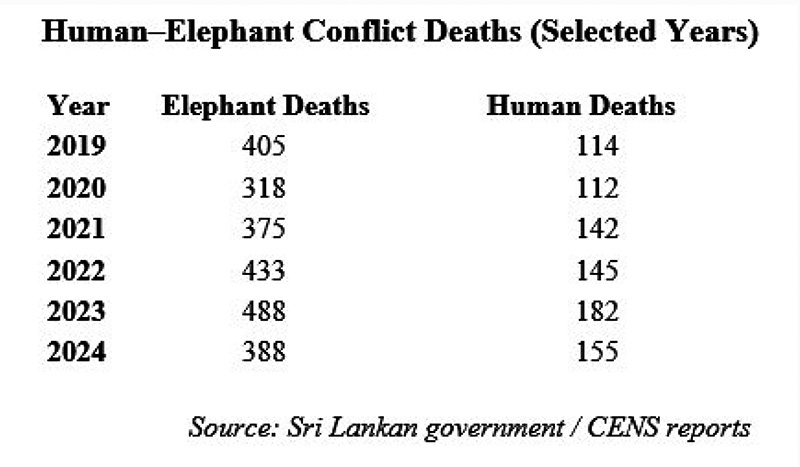
Sri Lanka’s long-running human–elephant conflict has become one of the most persistent and tragic wildlife-related crises in the country. According to recent government figures, between 2015 and 2024 the conflict resulted in the deaths of at least 3,477 wild elephants and 1,190 people — an average of hundreds of deaths of both humans and elephants each year.

The worst-affected areas tend to be in the dry zone districts, where the island’s elephant population and rural farming communities share land. Zones such as Anuradhapura, Polonnaruwa, and parts of the North Central and Eastern Provinces have reported high numbers of elephant fatalities and human casualties as herds move through traditional corridors fragmented by agriculture and infrastructure development.

Experts say habitat loss, shrinking forests, and blocked wildlife corridors have forced elephants into agricultural lands and villages, where they raid crops and occasionally attack people — often with tragic outcomes. In recent years individual districts in the North Central region reported hundreds of elephant deaths attributed to human-related causes such as poisoning, electrocution and train collisions, as well as retaliatory killings by villagers.

At the Puttalam meeting, Minister Abeyratne called for more proactive engagement by wildlife authorities, including rapid response teams to deter elephant incursions before they escalate into incidents that endanger lives.

Local residents told the committee that repeated encounters have eroded confidence in current response measures, and they urged better coordination between disaster management bodies and wildlife officers to prevent future tragedies.


from The Island https://ift.tt/FH7jdsy

CNN halted as Trump 'slurring words' with health concerns paramount


CNN interrupted programming for live coverage of Donald Trump's press conference as viewers raised concerns about the president's speech and alertness

from Daily Express :: US Feed https://ift.tt/T5uoXOG

Saturday, January 3, 2026

THE SHEER COINCIDENCE THAT CHANGED MY LIFE

The myopic and inward-looking coalition government of Sirimavo Bandaranaike (of 1970) caused a lot of hardships for the general populace and especially for the farmers and the agricultural sector. Her reign mercifully came to an end in July 1977 after a seven-year schnozzle. Sirimavo stuck to cosmetics and changed the name of Ceylon to Sri Lanka and also we became a new republic on May 22, 1972, which is now celebrated as the Republic Day. These changes did not improve the quality of life of the citizens. However our brand of tea is still Ceylon Tea in 2024 which shows that Sirimavo and her cohorts were keen more on semantics at the expense of economic development and improving the quality of life.

Junius Richard Jayewardene( JRJ) became the new leader of the country and he went to the opposite mode and immediately adapted an open market economy model leading to an influx of hundreds of imports. For the citizens starved of many comforts it was “manna from heaven”. Even for me the ‘manna’ became unaffordable as the prices reflected the world prices whilst we were getting Sri Lankan third world salaries. Even though I was getting a far higher salary at Elephant House (EH) than my counterparts in the public and private sectors, the imports personally became ‘unreachable luxuries”.

Elephant House was unique in the sense that it was an organization that produced a variety of products under one roof in Slave Island. Soft drinks, processed food like ham, bacon and milk products as bottled milk, ice cream and cheese. It was a case of 24 hours operations sometimes and which kept us group of engineers on our toes ensuring that there were no breakdowns. I learned a lot about planning and man management there. There were two branches in Trincomalee producing soft drinks to cater to the East and Northern regions and a show room cum restaurant in Kandy. There also was the Mahaberiatenne Farm about 10 kilometres from Kandy. The farm went under water during the Mahaweli Dam Project around late 1970s.

Apart from the chief engineer, the five of us beneath him in a flat structure averaged less than 32 years in age in 1978. All went into greener pastures after leaving EH by 1981, with two engineers becoming entrepreneurs and starting factories of their own to become multi- millionaires and giving employment to many by year 2000.

I decided with my wife that we needed to go abroad to save a bit and return to Sri Lanka after a spell of about three years. Up to that time we had paid many visits to Katunayake International Airport (KIA) to bid good bye to our friends who were leaving the country on a permanent basis having obtained migration to the West or in a temporary capacity for a job stint abroad, mainly to Africa or the Middle-East.

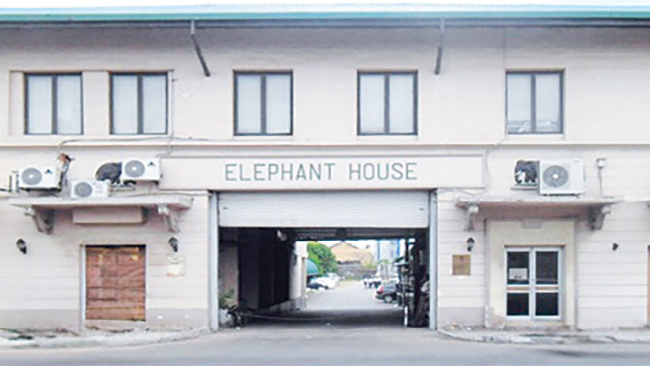
Elephant House Slave Island

Married and with a three -year old son, our prime reasons for seeking a job was to save enough to renovate and upgrade our existing house and buy a new car. On a balmy day in March 1978 , I took a day’s leave and visited the United States Information Centre and went through the booklet “Scholarships Offered Around the World”. I applied to three Universities in USA and to University of Delft in Netherlands to do a post graduate degree in management. These were the days where there was no internet and one had to wait about a month for the reply post.

At the time I was well on the way to completing the UK based Chartered Institute of Management Accountants (CIMA) qualifications having completed four parts of the five -part examination through external studies. I soon realized while working at St. Anthony’s Industries to 1973 that knowledge and qualifications in finance brings one closer to the higher management and the board and directors. Operational duties and responsibilities in technical and production management did not carry the same weight. Closer to the higher management, greater the propensity to climb the higher rungs of the employment ladder. An engineering degree had to be supplemented by a finance qualifications to climb upwards.

I received an offer of a full scholarship from the Institute of Research For Management Science (RIBM in Dutch) affiliated to the University of Delft. Air fares were part of the offer plus full tuition fees and a monthly stipend to cover living expenses.

My elation was to be cut short by a letter from the Department of External Resources of the Central Bank within a fortnight. The disappointing news was: “As you are a private sector employee you are not entitled to the scholarship offered by RIBM as these are only for public sector employees as per the agreement between the Netherlands and Sri Lankan Governments”.

The gods were not looking down kindly on me, but my ‘karma’ was good and unknown to me a series of events were about to take place.The executive chairman of Elephant House (EH) was Mr Mallory Wijesinghe, who also acted as the Honorary Consul in Sri Lanka for Netherlands. I took the letter of rejection to his impressively laid out board room. He read it, smiled and said, “leave it with me”.

Unknown to me he was to entertain the Chairman of Netherlands Universities Foreign Fund for International Cooperation (NUFFIC), Hans Jongens for dinner at the Intercontinental Hotel that night. Jongens was on a two-day visit to Sri Lanka. Following day the Chairman called me to his consular office and said “RIBM have decided to award you a private scholarship. Central Bank will not interfere any more”.

A case of sheer coincidence and being at the right place at the right time. And he added a word of warning “Do not go to Central Bank to seek permission to get your foreign exchange”. That was a reference to the 25 pounds sterling in foreign exchange every citizen was entitled to take abroad after approval by the Central Bank (CB). There was the possibility that an over zealous official may have found that I was going on a private scholarship, and erroneously concluded that I was depriving a deserving public servant should I seek foreign exchange approval.

I managed to buy US $ 20 in the black market from Chatham Street which was in my pocket. Formalities at the Katunayake Airport were a breeze, as I had no record of officially availing of foreign exchange with no stamp on my first ever passport. This was my first flight out of the country, and it was on KLM, the Dutch carrier. Those were the days where no free booze was available on board and I desperately wanted to have my first ever Heineken. So I ordered a beer. My heart sank at the when I paid for it. Bloody hell! Five dollars or some 25% my foreign reserves gone towards one lousy beer. It was to leave a bitter taste and was sipped very slowly to last a long time till dinner was served.

Schiphol Airport in the Netherlands, then one of the best in the world, was a revelation to me that summer day in mid-July compared to out KIA. My first monthly stipend of the scholarship was awaiting me at the reception counter. How easy the systems were in Netherlands was the first thought in my mind.

Two months into studies and I responded to an advertisement on the “Uni” notice board and was fortunate to secure a position in the “Beer Tasting Panel of Heineken”. No fuss, nothing to spend, taste some beer and fill in the questionnaires. here were seven of us on the panel – free beer, cheese, ham and bread to go with it at a once a month feast. It was not a duty to be shirked or taken lightly.

I did well in my studies and writing to prospective employers from the Netherlands brought results. Zambian Consolidated Mines offered me a job in their Kitwe mines. I was interviewed in London and also had to attend a presentation about Zambia and the mines. Accompanying the letter of appointment was a “list of things not available or hardly in supply in Zambia”. It was like re-visiting the chaos of Sirimavo Government up to 1977 with shortage of essentials and the need to hoard basics at home. I very well remember the saga of imported Bombay onions as an example of the inefficient situation set in place by Sirimavo’s government. Zambia was a replication of the chaotic state we experienced from the information provided by my prospective employer.

Someone in office would say that the government controlled CWE had received a stock of onions and we would abandon our duty stations and rush to buy the allocated “quota’ of two pounds after a long wait in the queue. Sirimavo created a new profession for the many unemployed. They became “professional queue joiners” who would reserve a place for you for a rupee.

Fortunately, I obtained another offer from Malaysia through the efforts and courtesy of my childhood friend Nihal Cooray and accepted that offer. I began work in April 1979. My friend returned to Colombo after being head hunted and recruited from Kuala Lumpur shortly after my arrival, much to our disappointment. Nihal was very successful in his new job, rising to be a Director of a subsidiary of the Maharajah Organisation.

The clinchers for my recruitment were my EH experience and my studies in Delft respectively. From Malaysia we moved over to Singapore in 1981. The 1978/79 winter was the worst up to that time in Netherlands and UK. I was in London for the interview for Zambia and was to meet some of my friends for a Sri Lankan New Year celebration on December 31. However the Tube was shut down and travel was not possible. Similar situation existed in Netherlands.

Whilst working in Perth, in 2018, I met a Dutch migrant to Australia, a woman who was born on January 1, 1979 in the Netherlands. Due to the heavy snow her mother was flown by helicopter to the hospital for her delivery. What a coincidence? I was fortunate to host Mr Mallory Wijesinghe twice to dinner in Singapore during my stay. Being at the right place at the right time, he transformed my career. It was whilst in Singapore and in July 1983 that President JR Jayewardene’s goons carried out atrocities against the Tamils. This action led to UN declaring Tamils as refugees leading to the flight of talent to the West.

Our plans to return to Sri Lanka were also abandoned. Since 1978/79, we have lived outside of Sri Lanka with regular visits to the country of birth for a holiday.

(Excerpted from the anecdotal memoirs of Nihal Kodituwakku) ✍


from The Island https://ift.tt/yM2u5JO

Friday, January 2, 2026

Closure of Public Debt Department of the Central Bank of Sri Lanka

The Central Bank of Sri Lanka (CBSL) announces the closure of the Public Debt Department (PDD) and the transfer of the LankaSecure Division of PDD to the Payments and Settlements Department (PSD), effective 01 January 2026.

The Public Debt Management Office (PDMO) was established within the Ministry of Finance, Planning and Economic Development (MoF) under the Public Debt Management Act No. 33 of 2024 (PDM Act) in December 2024. The PDMO became fully operational in December 2025 and assumed full responsibility over the debt management functions previously carried out by PDD. This transfer was effected in view of strengthening institutional accountability and enhancing the efficiency and transparency of Sri Lanka’s debt management framework.

However, in terms of the relevant provisions of the PDM Act and the Central Bank of Sri Lanka Act, No. 16 of 2023, the CBSL will continue to operate the Scripless Securities Settlement System and the Central Depository System for government securities under PSD, effective from 01 January 2026, with the Director of PSD appointed as Registrar of Government Securities.


from The Island https://ift.tt/lOUH6V2

Thursday, January 1, 2026

Air quality dips to ‘slightly unhealthy’ in key cities, NBRO warns

The National Building Research Organisation (NBRO) yesterday warned that air quality is deteriorating across several urban centres, with recent readings showing conditions slipping into “slightly unhealthy” levels.

Colombo 07, Vavuniya, Kandy, Kegalle, Galle, Embilipitiya, and Puttalam recorded Air Quality Index (AQI) values above 100 over the past 24 hours, the NBRO said.

The agency forecasts that the situation will persist over the next 24 hours, with nationwide AQI levels ranging between 44 and 112. While most cities are expected to remain at moderate levels, Galle and Puttalam may continue experiencing slightly unhealthy conditions, whereas Nuwara Eliya is likely to enjoy “good” air quality.

Officials urged residents, especially sensitive groups such as children, the elderly, and those with respiratory conditions, to wear masks and seek medical attention if they experience breathing difficulties.

The NBRO also warned that peak pollution hours are expected between 8–9 am and 4–5 pm, advising the public to exercise caution during these times.


from The Island https://ift.tt/hDEfZgU

President pays homage to the Sacred Tooth Relic

President Anura Kumara Dissanayake visited the historic Sri Dalada Maligawa (Temple of the Sacred Tooth Relic) in Kandy on Thursday (01) morning , where he paid homage to the Sacred Tooth Relic and received blessings for the New Year. Thereafter, the President called on the Mahanayake Theros of the Malwathu and Asgiri Chapters and received their blessings.

The President also participated in religious observances held at the Temple of the Sacred Tooth Relic and engaged in cordial conversation with devotees who had gathered to mark the New Year.

Subsequently, the President visited the Malwathu Maha Vihara and called on the Most Venerable Thibbatuwawe Sri Sumangala Mahanayake Thero. The President also inquired into the well-being of the Mahanayake Thero and engaged in a brief discussion.

The Deputy Registrar of the Malwathu Chapter, the Most Venerable Rajakeeya Panditha Darshanapathi Mahawela Rathanapala Nayaka Thero, was also present on the occasion. The Maha Sangha chanted Seth Pirith and invoked blessings upon the President.

The President also met the Anunayake of the Malwathu Chapter, the Most Venerable Dimbulkumbure Vimaladhamma Thero, and inquired into his well-being.

Subsequently, President Dissanayake visited the Asgiri Maha Vihara, where he met the Most Venerable Warakagoda Sri Gnanarathana Mahanayake Thero of the Asgiri Chapter and engaged in a brief discussion.

Extending New Year blessings to the President, the Asgiri Mahanayake Thero expressed his best wishes for the successful continuation of the Government’s programme, led by the President, aimed at building a more prosperous nation for the people, with renewed strength and determination in the New Year.

The President also met the Anunayake of the Asgiri Chapter, the Most Venerable Narampanawa Ananda Anunayake Thero, and held a brief discussion.

During these meetings, the President briefed the Mahanayake Theros and Anunayake Theros of both chapters on the measures being implemented by the Government to address the challenges arising from the most severe natural disaster in the country’s history experienced in the past year. The Maha Sangha extended their blessings for the successful continuation of these efforts.

Deputy Minister of Transport and Highways, Prasanna Gunasena, Member of Parliament Thanura Dissanayake and several others were also present on the occasion.


from The Island https://ift.tt/ZM6eQyl