
The myopic and inward-looking coalition government of Sirimavo Bandaranaike (of 1970) caused a lot of hardships for the general populace and especially for the farmers and the agricultural sector. Her reign mercifully came to an end in July 1977 after a seven-year schnozzle. Sirimavo stuck to cosmetics and changed the name of Ceylon to Sri Lanka and also we became a new republic on May 22, 1972, which is now celebrated as the Republic Day. These changes did not improve the quality of life of the citizens. However our brand of tea is still Ceylon Tea in 2024 which shows that Sirimavo and her cohorts were keen more on semantics at the expense of economic development and improving the quality of life.
Junius Richard Jayewardene( JRJ) became the new leader of the country and he went to the opposite mode and immediately adapted an open market economy model leading to an influx of hundreds of imports. For the citizens starved of many comforts it was “manna from heaven”. Even for me the ‘manna’ became unaffordable as the prices reflected the world prices whilst we were getting Sri Lankan third world salaries. Even though I was getting a far higher salary at Elephant House (EH) than my counterparts in the public and private sectors, the imports personally became ‘unreachable luxuries”.
Elephant House was unique in the sense that it was an organization that produced a variety of products under one roof in Slave Island. Soft drinks, processed food like ham, bacon and milk products as bottled milk, ice cream and cheese. It was a case of 24 hours operations sometimes and which kept us group of engineers on our toes ensuring that there were no breakdowns. I learned a lot about planning and man management there. There were two branches in Trincomalee producing soft drinks to cater to the East and Northern regions and a show room cum restaurant in Kandy. There also was the Mahaberiatenne Farm about 10 kilometres from Kandy. The farm went under water during the Mahaweli Dam Project around late 1970s.
Apart from the chief engineer, the five of us beneath him in a flat structure averaged less than 32 years in age in 1978. All went into greener pastures after leaving EH by 1981, with two engineers becoming entrepreneurs and starting factories of their own to become multi- millionaires and giving employment to many by year 2000.
I decided with my wife that we needed to go abroad to save a bit and return to Sri Lanka after a spell of about three years. Up to that time we had paid many visits to Katunayake International Airport (KIA) to bid good bye to our friends who were leaving the country on a permanent basis having obtained migration to the West or in a temporary capacity for a job stint abroad, mainly to Africa or the Middle-East.
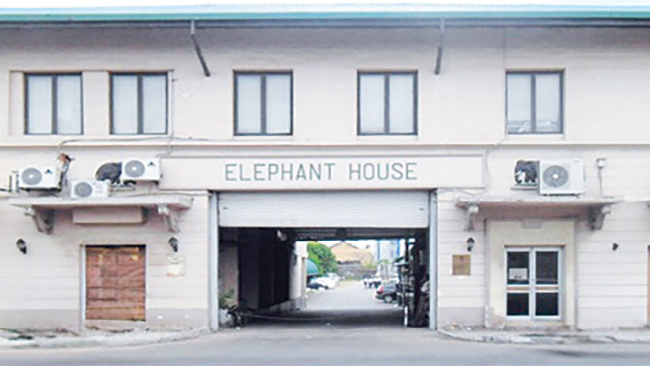
Elephant House Slave Island
Married and with a three -year old son, our prime reasons for seeking a job was to save enough to renovate and upgrade our existing house and buy a new car. On a balmy day in March 1978 , I took a day’s leave and visited the United States Information Centre and went through the booklet “Scholarships Offered Around the World”. I applied to three Universities in USA and to University of Delft in Netherlands to do a post graduate degree in management. These were the days where there was no internet and one had to wait about a month for the reply post.
At the time I was well on the way to completing the UK based Chartered Institute of Management Accountants (CIMA) qualifications having completed four parts of the five -part examination through external studies. I soon realized while working at St. Anthony’s Industries to 1973 that knowledge and qualifications in finance brings one closer to the higher management and the board and directors. Operational duties and responsibilities in technical and production management did not carry the same weight. Closer to the higher management, greater the propensity to climb the higher rungs of the employment ladder. An engineering degree had to be supplemented by a finance qualifications to climb upwards.
I received an offer of a full scholarship from the Institute of Research For Management Science (RIBM in Dutch) affiliated to the University of Delft. Air fares were part of the offer plus full tuition fees and a monthly stipend to cover living expenses.
My elation was to be cut short by a letter from the Department of External Resources of the Central Bank within a fortnight. The disappointing news was: “As you are a private sector employee you are not entitled to the scholarship offered by RIBM as these are only for public sector employees as per the agreement between the Netherlands and Sri Lankan Governments”.
The gods were not looking down kindly on me, but my ‘karma’ was good and unknown to me a series of events were about to take place.The executive chairman of Elephant House (EH) was Mr Mallory Wijesinghe, who also acted as the Honorary Consul in Sri Lanka for Netherlands. I took the letter of rejection to his impressively laid out board room. He read it, smiled and said, “leave it with me”.
Unknown to me he was to entertain the Chairman of Netherlands Universities Foreign Fund for International Cooperation (NUFFIC), Hans Jongens for dinner at the Intercontinental Hotel that night. Jongens was on a two-day visit to Sri Lanka. Following day the Chairman called me to his consular office and said “RIBM have decided to award you a private scholarship. Central Bank will not interfere any more”.
A case of sheer coincidence and being at the right place at the right time. And he added a word of warning “Do not go to Central Bank to seek permission to get your foreign exchange”. That was a reference to the 25 pounds sterling in foreign exchange every citizen was entitled to take abroad after approval by the Central Bank (CB). There was the possibility that an over zealous official may have found that I was going on a private scholarship, and erroneously concluded that I was depriving a deserving public servant should I seek foreign exchange approval.
I managed to buy US $ 20 in the black market from Chatham Street which was in my pocket. Formalities at the Katunayake Airport were a breeze, as I had no record of officially availing of foreign exchange with no stamp on my first ever passport. This was my first flight out of the country, and it was on KLM, the Dutch carrier. Those were the days where no free booze was available on board and I desperately wanted to have my first ever Heineken. So I ordered a beer. My heart sank at the when I paid for it. Bloody hell! Five dollars or some 25% my foreign reserves gone towards one lousy beer. It was to leave a bitter taste and was sipped very slowly to last a long time till dinner was served.
Schiphol Airport in the Netherlands, then one of the best in the world, was a revelation to me that summer day in mid-July compared to out KIA. My first monthly stipend of the scholarship was awaiting me at the reception counter. How easy the systems were in Netherlands was the first thought in my mind.
Two months into studies and I responded to an advertisement on the “Uni” notice board and was fortunate to secure a position in the “Beer Tasting Panel of Heineken”. No fuss, nothing to spend, taste some beer and fill in the questionnaires. here were seven of us on the panel – free beer, cheese, ham and bread to go with it at a once a month feast. It was not a duty to be shirked or taken lightly.
I did well in my studies and writing to prospective employers from the Netherlands brought results. Zambian Consolidated Mines offered me a job in their Kitwe mines. I was interviewed in London and also had to attend a presentation about Zambia and the mines. Accompanying the letter of appointment was a “list of things not available or hardly in supply in Zambia”. It was like re-visiting the chaos of Sirimavo Government up to 1977 with shortage of essentials and the need to hoard basics at home. I very well remember the saga of imported Bombay onions as an example of the inefficient situation set in place by Sirimavo’s government. Zambia was a replication of the chaotic state we experienced from the information provided by my prospective employer.
Someone in office would say that the government controlled CWE had received a stock of onions and we would abandon our duty stations and rush to buy the allocated “quota’ of two pounds after a long wait in the queue. Sirimavo created a new profession for the many unemployed. They became “professional queue joiners” who would reserve a place for you for a rupee.
Fortunately, I obtained another offer from Malaysia through the efforts and courtesy of my childhood friend Nihal Cooray and accepted that offer. I began work in April 1979. My friend returned to Colombo after being head hunted and recruited from Kuala Lumpur shortly after my arrival, much to our disappointment. Nihal was very successful in his new job, rising to be a Director of a subsidiary of the Maharajah Organisation.
The clinchers for my recruitment were my EH experience and my studies in Delft respectively. From Malaysia we moved over to Singapore in 1981. The 1978/79 winter was the worst up to that time in Netherlands and UK. I was in London for the interview for Zambia and was to meet some of my friends for a Sri Lankan New Year celebration on December 31. However the Tube was shut down and travel was not possible. Similar situation existed in Netherlands.
Whilst working in Perth, in 2018, I met a Dutch migrant to Australia, a woman who was born on January 1, 1979 in the Netherlands. Due to the heavy snow her mother was flown by helicopter to the hospital for her delivery. What a coincidence? I was fortunate to host Mr Mallory Wijesinghe twice to dinner in Singapore during my stay. Being at the right place at the right time, he transformed my career. It was whilst in Singapore and in July 1983 that President JR Jayewardene’s goons carried out atrocities against the Tamils. This action led to UN declaring Tamils as refugees leading to the flight of talent to the West.
Our plans to return to Sri Lanka were also abandoned. Since 1978/79, we have lived outside of Sri Lanka with regular visits to the country of birth for a holiday.
(Excerpted from the anecdotal memoirs of Nihal Kodituwakku) 
from The Island https://ift.tt/yM2u5JO

No comments:
Post a Comment