
In the vast dry-zone wilderness of Sri Lanka, where ancient reservoirs mirror crimson sunsets and monsoon winds whisper through forests untouched for centuries, there still roams a giant who has become both legend and symbol.
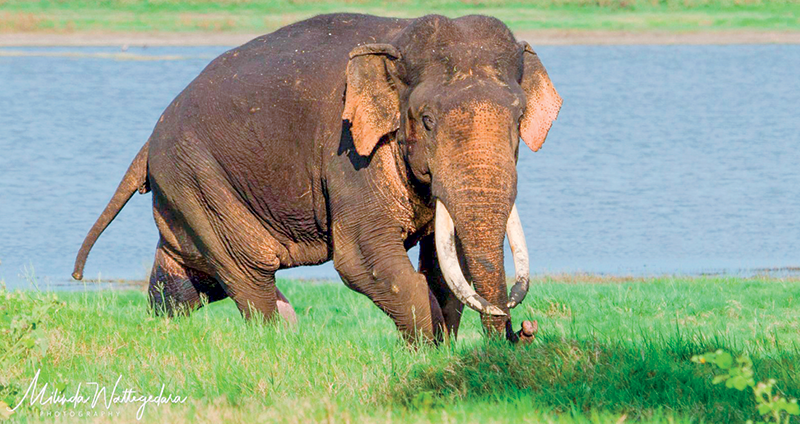
His name is Mahasen — perhaps the most celebrated wild tusker Sri Lanka has ever known.
To wildlife enthusiasts, photographers, researchers, and villagers across the North Central Province, Mahasen is not merely an elephant. He is the living embodiment of Sri Lanka’s ancient wilderness, a reminder of a time when giant tuskers ruled the forests that surrounded the island’s great hydraulic civilisation.
Secretary and Chief Coordinator of Wild Tuskers of Sri Lanka, Chandika Lakmal, describes Mahasen as “one of the greatest living treasures of Sri Lanka’s natural heritage.”
“When people see Mahasen, they are not simply looking at a wild elephant,” he said.
“They are witnessing history, culture, ecology, and wilderness all combined into one magnificent animal. Tuskers like Mahasen are extremely rare, and losing such an elephant would mean losing a part of Sri Lanka’s identity itself.”
Sri Lanka has long shared a sacred bond with elephants. Ancient kings regarded tuskers as symbols of sovereignty and divine authority.
From the kingdoms of Anuradhapura and Polonnaruwa to the Kandyan era, elephants marched beside rulers during ceremonies and wars alike. Within Buddhist culture, elephants became revered symbols of strength, wisdom, and spiritual purity.
Yet among all elephants, the tusker has always occupied a special place.
Unlike African elephants, only a very small percentage of male Asian elephants develop tusks. This makes Sri Lankan tuskers exceptionally rare. Over centuries, they became deeply embedded in folklore, temple art, and village legends.
Mahasen stands today as perhaps the finest surviving example of that ancient legacy.
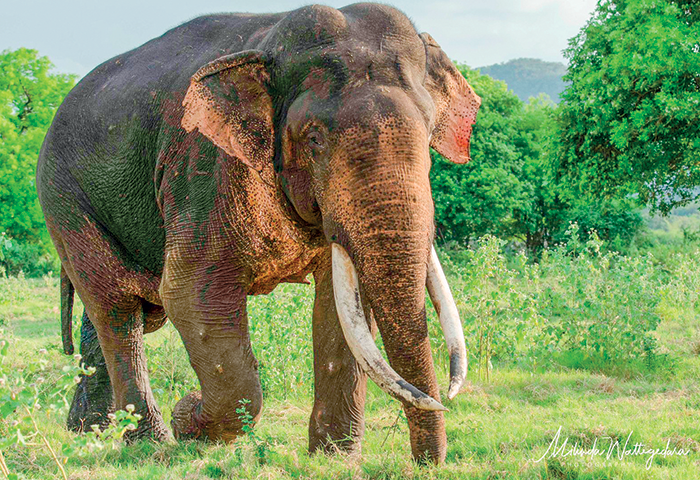
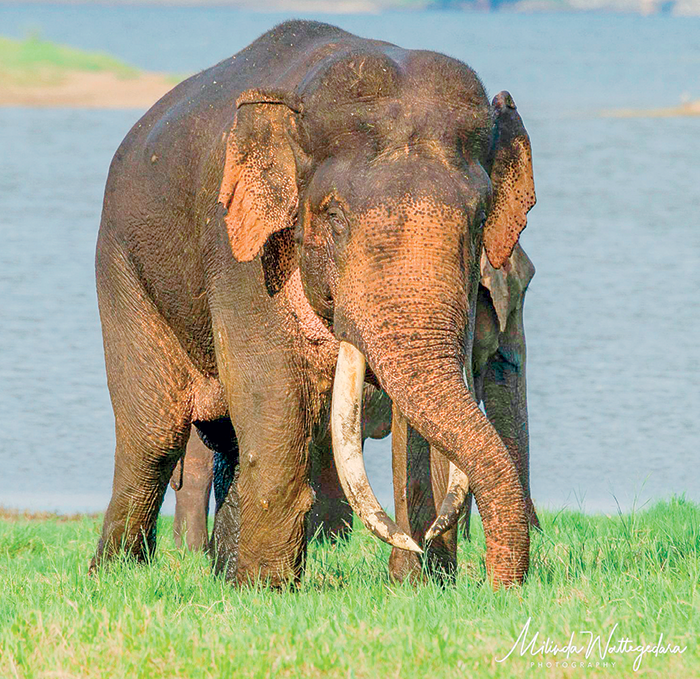
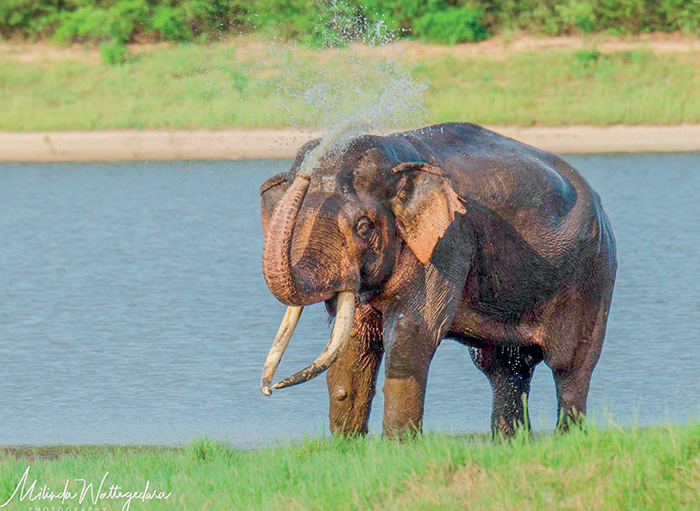
Mahasen, one of Sri Lanka’s most iconic wild tuskers, photographed during his majestic prime in 2014 and in 2025 as the ageing giant continues his struggle for survival in the island’s shrinking wilderness
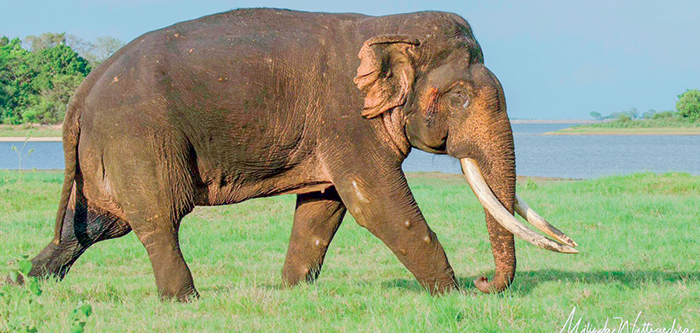
Later, the giant elephant was named Mahasen in honour of the ancient King Mahasen, the visionary ruler who built the magnificent Minneriya Tank. The name reflected not only strength and majesty, but also a deep connection to the same historic landscape shaped by kings, forests, and elephants thousands of years ago.
Today, Mahasen is believed to be around 60 years old, making him one of the oldest surviving wild tuskers in Sri Lanka. Towering above most elephants, he possesses perhaps the largest pair of tusks ever documented among Sri Lanka’s wild elephants, stretching beyond six feet in length.
For decades, Mahasen became one of the greatest attractions of the famous elephant gathering at Minneriya National Park and Kaudulla National Park — one of the largest congregations of Asian elephants anywhere in the world.
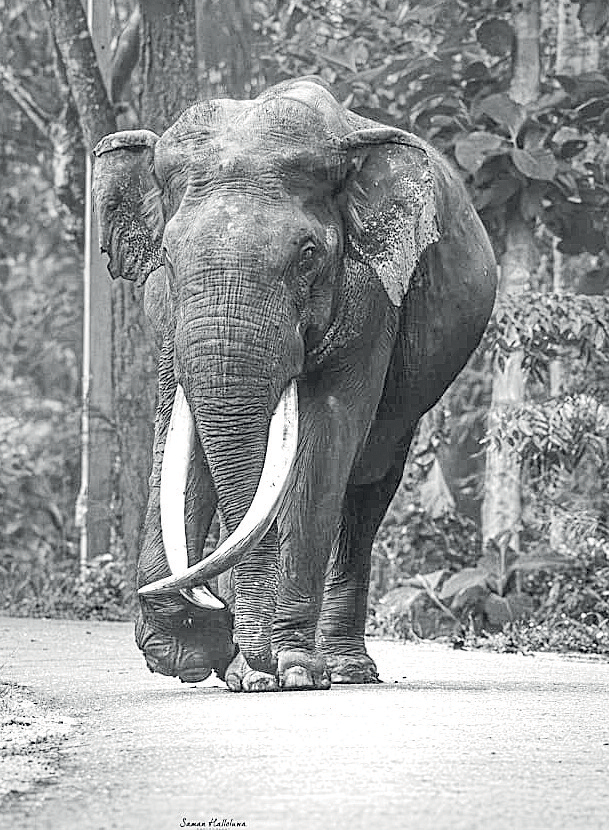
Photographers from across the globe waited patiently for hours hoping to capture the old king emerging from the dusty grasslands, at dusk, his enormous tusks glowing beneath the golden evening light. For many wildlife lovers, witnessing Mahasen in the wild became an unforgettable experience.
“Mahasen carries an extraordinary presence,” Chandika Lakmal explained. “Even among large elephants, he stands apart. There is a certain calmness, confidence, and dignity in the way he moves. You immediately understand why ancient people considered tuskers sacred.”
Yet beyond his beauty and fame, Mahasen also represents the fragile future of Sri Lanka’s elephants.
Modern conservation science identifies elephants as “keystone species” and “umbrella species,” meaning their survival protects entire ecosystems. Elephants create pathways through forests, disperse seeds, maintain grasslands, and help sustain biodiversity across vast landscapes.
“Elephants are ecosystem engineers,” Chandika Lakmal said. “The forest itself depends on them. Without elephants, the structure of these ecosystems begins to change. Protecting tuskers, like Mahasen, means protecting entire habitats and countless other species.”
Sadly, Sri Lanka’s wild elephants now face mounting threats.
Habitat fragmentation, shrinking forests, electric fences, roads, railway accidents, illegal shootings, and human-elephant conflict continue to endanger their survival.
Nearly 60 percent of Sri Lanka’s wild elephants live outside protected national parks, surviving within fragmented forests and ancient tank ecosystems increasingly surrounded by human settlements.
Traditional elephant migration corridors that existed for centuries have now been blocked by agriculture and development projects. As elephants lose access to food and water, they are increasingly forced into villages and farmlands, creating dangerous encounters between humans and wildlife.
Even Mahasen has not escaped these pressures.
In recent years, the ageing tusker’s movements have become increasingly restricted. Wildlife observers believe the enormous weight of his tusks, combined with old age, has forced him into smaller forest patches between Kakirawa and Maradankadawala where food and water are available within shorter distances.
Several months ago, Mahasen was discovered with a serious wound on his back believed to have been caused either by a gunshot injury or a clash with another elephant. Wildlife officials intervened quickly and treated the giant tusker, offering hope that he would recover once again.
However, concern continues to grow among conservationists and wildlife enthusiasts as sightings of Mahasen have become increasingly rare in recent months.
For many Sri Lankans, the thought of losing Mahasen is deeply emotional.
“Mahasen is not just another elephant,” Chandika Lakmal said quietly. “He is one of the last living symbols of Sri Lanka’s ancient wilderness. Future generations deserve the chance to see such animals alive in our forests, not only in photographs or history books.”
Despite his immense ecological and cultural importance, many villagers living near elephant habitats still struggle with fear and economic hardship caused by crop raids and property damage.
Conservationists stress that long-term coexistence can only be achieved through proper land-use planning, protection of elephant corridors, community awareness, and sustainable conservation policies.
Across the forests of Yala National Park, Wilpattu National Park, Gal Oya National Park, and Wasgamuwa National Park, Sri Lanka’s remaining tuskers continue their silent struggle against an uncertain future.
But among them all, Mahasen remains special.
He is more than an old tusker wandering through fading forests.
He is the last king of a vanishing wilderness.
And as long as Mahasen still walks beneath the ancient trees of Sri Lanka’s dry zone, the spirit of the island’s wild heritage continues to survive majestic, untamed, and unforgettable.
By Ifham Nizam
from The Island https://ift.tt/pvZozID

No comments:
Post a Comment