Sunday, September 8, 2024

Some reflections on 21/9 presidential election

To this day, one can see protest marches led by government sector unions facing water canon attacks. Just in time for the postal votes, government had recognised the unbearable cost of living which had ignited the public sector and promised pay hikes. That would benefit a maximum of 1.5 million in government service and their families, say six million in all. What about the 23-06= 17 million others?

By M M Zuhair

The forthcoming September Presidential Election, the first after the country lost its economic clout due to bankruptcy, is having a much deeper impact on the people of the country than most of the previous elections. People appear to be much more conscious of the value of their votes than ever before. Voters are fully aware that they have to pay a heavy price, particularly in terms of the cost of living and survival in this country, if they make the wrong choice!

The massive peoples’ protests that commenced in March 2022, the Aragalaya can never be forgotten by anyone who will sit in the presidential hot seat after the national level elections. The prospective President must be well advised to remember throughout his administration, two features in the mass protests that erupted beyond the expectation of the then leaders.

Firstly, the President should not forget, even if aware, that the mass protests were a national outcry against those who caused economic bankruptcy that led to hunger and anger in a country blessed with abundant natural resources in comparison with most countries in the world. The protesters blamed it all mainly on gross mismanagement and corruption. The ‘never before experienced’ struggle protesting the unbearable rise in the cost of a wide range of daily essentials with large numbers of Sri Lankans meanwhile emigrating were all blamed on the then President Gotabaya Rajapaksa and his government.

Secondly, the primarily youth-led national outcry united all sectors of the country’s population rising above all ethno-religious divisions, also blamed by the youths and respected monks on the then President for exploiting race and religion for winning elections. The result: President abdicated.

The Presidential Election 2024 coming up on 21st September is the first national election the country faces, following the mass protests, which for the first time in Sri Lankan history ousted the then sitting President. If anyone assumes that the outcry has been successfully contained, not recognizing that it is only dormant, that would be a major blunder that could cost the country enormously.

To this day, one can see protest marches led by government sector unions facing water canon attacks. Just in time for the postal votes, government had recognised the unbearable cost of living which had ignited the public sector and promised pay hikes. That would benefit a maximum of 1.5 million in government service and their families, say six million in all. What about the 23-06= 17 million others?

I dare predict that the results of the forthcoming elections will show that the country wants a change of government, a real democratic change that will oust the very same Cabinet and the very same executive that governed under President Gotabaya Rajapaksa (GR) as well as under President Ranil Wickremesinghe (RW). Over 80% of the people, both rural and urban, inclusive of the government servants who received a pay hike do want an effective change in the rulers while over half of the voting population clamour for a change not only at the top but also a ‘system change’.

Notwithstanding the predictions of the US-funded NGO surveys, limited in scope and ambit, the 21/9 results would show a strong verdict against those who are perceived by the countrywide population as those who caused and are responsible for the on-going economic hardships and sufferings. President Wickremesinghe is also within that single loop!

People also know that President Ranil Wickremesinghe was the Prime Minister of the country for five years, preceding the election of GR as the President, except for 50 days in October to December 2018, and also succeeded GR as the President and worked with the virtual Pohottuwa Cabinet supported by the Pohottuwa MPs. RW is seen, at times unfairly, as part and parcel of the ousted Pohottuwa team and therefore equally accountable for the country’s disastrous fall out.

Both RW and Namal Rajapaksa (NR) have their respective support bases in the country and amongst all communities now fielding two separate candidates, splitting the hitherto single vote base into two. In addition Pohottuwa is already split into factions, supporting groups opposed to RW. Furthermore, RW having in addition antagonised those who staged the Aragalaya, though appreciated by the business elites, had lost a vital and vocal pro change group in the voter base, partly to the SJB but mostly to Anura’s NPP.

Additionally, RW has lost the northern vote block, partly to the Tamil independent candidate and the rest to Sajith’s SJB, following the recent Indian security advisor’s visit to the country. RW had earlier on, lost the Christian vote block mostly to the SJB, following his provocative partnership with the Pohottuwa. More than 90% of the 1.65 million Muslim vote block was never with him, because of RW continuing Pohottuwa’s “collective punishment” of this community due to the Easter attacks, while ignoring the oft repeated cries of the victimised Christian flock for action against those who failed to prevent the attacks, at a time when it was clearly preventable.

NR however is demonstrating potentially attractive leadership, which can make Pohottuwa blossom in another ten years’ time, once the North East issues are settled by the next President in a manner acceptable to all communities and if NR will not make the costly blunder of seeing the minorities as ghosts! He should know that Muslims played a patriotic role during the war but were revenged upon from 2012 by Norwegian brain-washed majoritarian radicals that led to several anti-Muslim riots, attacks on over fifty Mosques and the despicable Easter attacks! Those and the role of other candidates are matters for a separate analysis.

Many foresee the possibility of RW joining hands with Namal, shortly before or even after the Presidential Elections. The several open pleas of RW to both SJB and the NPP to join hands with him, while exposing his realisation that he is in dire straits, have been rejected by the two parties, who appear to be in a close battle for the first place.

(The writer is a former Member of Parliament and a President’s Counsel).


from The Island https://ift.tt/z4ISitF

Saturday, September 7, 2024

Turf protection

With two weeks left before the long awaited presidential election, the campaigns of the principal contenders widely perceived to be Anura Kumara Dissanayake, Sajith Premadasa and the incumbent, Ranil Wickremesinghe – not necessarily in that order – are gaining momentum. Namal Rajapaksa was a late entry to the fray after billionaire businessman Dhammika Perera backed out for reasons he has not chosen to explain to the people. There have been defections by the score, so many that it’s hard to count, from the Rajapaksa party with the majority opting to go with RW, while a few have thrown their lot with Sajith Premadasa. What is crystal clear is that these defections have little to do with the fast approaching big contest but very much to do with the parliamentary election that will soon follow.

Defections as well as hastily cobbled alliances are obviously meant to cover parliamentary turf. The various MOUs or agreements between the different participants have not been made public but discerning people know that national list seats, portfolios, places on party lists of election candidates and what have you are all part of the currency of exchange. Obviously some of those outside parliament serving as party organizers for various electorates must become sacrificial lambs to accommodate defectors. They will not take kindly such arrangements and it remains to be seen what will follow. There can, of course, be let downs as evidenced by the country’s post-independence politics.

Who can forget that Mr. W. Dahanayake, a onetime prime minister, was persuaded not to run at Galle, for long his home turf, and placed on the UNP national list. Came the election results and his name was not among those selected for appointment to Parliament. If we remember right, President Premadasa made some arrangement about his pension. But he was forced into retirement. Another fall guy, if we may borrow from the American lexicon, was Mr. Maithripala Senanayake, who had long served the SLFP as its de facto deputy leader. He too was placed on a national list and fobbed off after the poll by being appointed Governor or the North Central Province. These examples vividly illustrate that anything is possible in politics.

Among the principal contenders, only the NPP/JVP has declared that there would be an immediate dissolution of the incumbent Parliament in the event of their election. The president is empowered by the constitution to dissolve the legislature at his discretion no sooner two years and six months have passed since its first meeting. This period has now lapsed and whoever is elected president on September 21, is empowered to dissolve. AKD says this is the first thing he will do once elected (note that he doesn’t say if he is elected) and has even gone as far as saying how he would form an interim government until a new Parliament is elected.

This with just his present three-member parliamentary group. He says that his parliamentary seat would be vacated should he become president and will be filled by a nomination by the party. He plans to run an interim government with four ministers – himself plus three MPs – and hold portfolios not allocated himself until a new Parliament is elected. Nothing is impossible: RW became PM and then president with a single national list seat!

Readers would remember that RW was under heavy pressure from the SLPP which elected him president, and particularly by Basil Rajapaksa, to first hold a parliamentary election and follow with a presidential contest. Wickremesinghe resisted this demand, made undoubtedly on a calculation that the SLPP whose stock had plunged to its lowest depths post aragalaya in July 2022, would be able to salvage at least a respectable parliamentary presence with such an arrangement.

By then many of the termites that disappeared from the picture had crawled out of the woodwork. The SLPP kept saying interminably that it would run a candidate for president but remained remarkably shy of naming that worthy. RW too dragged his feet about declaring his own candidacy while his proxies set about organizing his campaign. Clearly he was awaiting word of SLPP support but in the interim had no scruples about attracting pohottuwa MPs to his camp. Whether it was that or any other reason that made the SLPP abandon Wickremesinghe, we do not know.

The NPP/JVP made a concerted effort last week to convince a wide segment of business leaders that they had no reason to fear an administration of their party. The audience they attracted was significant. No doubt other contenders for the presidency also attracted a similar presence. Election funders commonly back more than one horse in the race regarding whatever they drop into political war chests both as insurance and investment. That has no doubt paid off in the past. Many observers and commentators have predicted that this election, unlike previous presidential polls, will see no candidate clearing the magic 50 percent plus one barrier at the first count. That would involve counting second and third preference votes. If there is yet no conclusive result, whoever led the popular vote will be declared the winner.

Whatever the outcome, photo-finish or otherwise, let us hope there will be no violence. While numerous complaints of violation of election law has already been reported, there has been no murder or mayhem thus far. Let us hope this situation will prevail until the final winner is declared.


from The Island https://ift.tt/yla7AvP

Electing the next President: Front Runners, Vote Banks and Ethnic Accounts

by Rajan Philips

The general view seems to be that Anura Kumara Dissanayaka and Sajith Premadasa are the clear front runners, but opinions differ as to who is first and who is second depending on which candidate one is rooting for. The general view is also that Ranil Wickremesinghe is running third, but there is no definite indication of how close or far behind he is. Those who support him say that he is surging. But no one is seriously suggesting that either of the front runners could get over 50% to be declared the winner after the first count.

So, for the first time after eight presidential elections, the winner is likely to be determined based on the 2nd or 3rd preferential ranks that voters end up marking for either of the first two candidates on the otherwise discarded ballots of the other 36 candidates including the third placed candidate. Importantly, the preferential ranks marked on the ballots of the first two candidates will be discarded and will not be counted against each other!

A run on the Vote Banks

In the 2019 election, Gotabaya Rajapaksa won 52% of the vote, Sajith Premadasa 42%, Anura Kumara Dissanayake 3%, and all others 3%. With Namal Rajapaksa in the fray, the vote for all candidates other than the first three could be significantly higher at 10% or even 15%, leaving 85% or 90% of the votes to be divided among the three main candidates. The vote proportion that Namal Rajapakse manages to get would critically impact what the three main candidates will be able to draw from GR/SLPP’s 52% vote bank.

The biggest loser already is Ranil Wickremesinghe and will lose big unless he is able to get Mahinda Rajapaksa to soften the filial campaign for his son. There could also be some impact on the vote tally of Anura Kumara Dissanayake who is likely drawing the bulk of his expanded new support from the GR/SLPP vote bank. SP too is hoping to draw votes from the same bank, although his primary efforts must be to preserve as much as possible of the 42% sources that he managed in 2019.

RW’s second predicament is that he is not able to peel away as much he would like to from the SP/SJB vote bank. Further, as an independent candidate RW cannot vigorously canvass on old UNP loyalties. The true UNP loyalty hopes for either SP or RW to give up the contest in favour of one of them standing as a single candidate. That is not going to happen. It is not only too late for that, but the voters will also see the cynical ploy in it and punish them by voting for AKD.

There are musings that a good number of those who vote for RW or SP may not choose either man for their second preference, but AKD instead. The palpable reason seems to be that many non-left voters appreciate AKD’s seeming sincerity and his anti-corruption platform but are wary of casting their (first preference) vote for a leftist candidate; hence, the second preference. Another concern about AKD and the NPP among urban middle class voters would appear to be the paucity of information about AKD’s team – especially who would be his economic advisors and who would be his senior ministers in a potential NPP government after the parliamentary election.

That said, Mr. Dissanayake should be commended for positively clarifying on Wednesday, at a meeting in Divulapitiya (as reported in the Daily Mirror, Sept. 4) that the NPP “will not violate the Constitution if elected on September 21,” and that he will continue with the current parliament and government, as required by the Constitution, until parliament is dissolved after one and a half months. But he has promised to make new appointments to the Boards and Commissions of important state agencies on the very morrow of his potential election. That is all appropriate and the people will get an early flavour of a potential NPP government. But we are getting ahead of ourselves here!

All of this is to say something about the simmering vibes that AKD might get a good chunk of second preferential rankings from those who vote for SP or RW. That may prove crucial if preferential votes are counted to determine a winner after an inconclusive (no one passing the 50% mark). Given the way that the 2019 vote banks of GR/SLPP and SP/SJB are expected to be divvied between the three front runners, no candidate is likely to get more than 40% on the first count. And what is also likely when preferentials are added is that whoever comes first after the first count will remain first and be declared the winner.

There is also a possibility, however remote, that one of the two front runners could end up with a clear (50% +) victory depending on how the two vote banks are drawn from. The dynamic here would be that if those voters who are now leaning towards RW or NR sense that it is either SP or AKD who is going to be the eventual winner, they might abandon RW and NR and migrate to SP or AKD and in numbers sufficient enough to make one of them scale the 50% fence.

This would be a substantial swing in the current situation but quite common in parliamentary elections unlike in presidential elections. Sri Lanka alternates between parliamentary and presidential elections and the former still infects the other. That there will be a parliamentary election immediately following creates a situation of permanent election momentum. This again will favour Sajith Premadasa and Anura Kumara Dissanayake, but not Ranil Wickremesinghe because he is now an independent one-man party with no plan or prospect for the succeeding parliamentary election.

Ethnic Accounts

There are two other layers in the two main vote banks from the 2019 election. One is the district account and the other makes up the ethnic accounts. Of the 22 electoral / administrative districts, Gotabaya Rajapaksa won the majority of the votes in 16 districts, and Sajith Premadasa in six districts that included the two districts in the Northern Province, three in the Eastern Province, and the Nuwara Eliya District in the Central Province. Of the 42% SP polled, nearly 26% was from the six districts – three of which are Sri Lankan Tamil Majority districts, two where Tamils and Muslims constitute the majority, and one includes significant numbers of the Malaiyaha Tamil community.

Including the numbers of the three groups in the other districts (mostly in the Western, Central, and to a lesser extent Southern Provinces) Sajith Premadasa’s tally would have included about 30 to 35% of all of what could be collectively called the Tamil speaking voters. Maintaining this support, or how these voters divide themselves between the candidates in this election, would be critical to Mr. Premadasa’s outcome on September 21. To be clear, issues and considerations will be specific to and vary between three groups, or electorally distinct ethnic accounts.

The 16 districts that Gotabaya Rajapaksa won are Sinhala majority districts and accounted for 93.5% of the 6.9 million people who GR repeatedly asserted voted for him. GR ran as an unabashedly Sinhala Buddhist candidate and convincingly won with 52% of the total votes. His victory exploded the plural presuppositions of the elected presidential system – i.e., a winning presidential candidate will require the support of non-Sinhala voters and must reflect their interests.

The redeeming vacuum in this month’s election is that there is no one running as a Sinhala Buddhist candidate of any claim or consequence. Remarkably, Namal Rajapaksa would seem to have closed that chapter for good in the family political book. Ultra nationalists will have to look elsewhere to discover a new authentic candidate. The aftermaths of the 2019 Easter bombings may have their own reverberations on September 21 and influence the voting of the Sinhala Catholics.

But by and large, the Sinhala majority voters are most likely to be concerned over economic conditions and cost of living issues. Even though a sampled majority of them do not think that any of the three front-running candidates has a convincing approach to navigate through the current crisis. One would hope that this unsurprising negativity will not result in a lower voter turnout. That will be unfortunate, for it is the voting shifts within this segment of voters that will determine the fortunes of the front runners and the eventual outcome.

Put another way, what matters is how the two front runners, as well as Ranil Wickremesinghe and Namal Rajapaksa in their side races, will draw on the Sinhala ethnic account to make up the bulk of their vote tallies. To be sure, there are sub-accounts within this segment based primarily on socioeconomic circumstances along with locational factors. Going by the 2019 results, Gotabaya Rajapaksa obtained more than 50% of the vote in 15 of the 16 districts where he got the majority vote. The lone exception was Badulla, where he got 49.29%. He exceeded 60% in four districts – the three southern districts and Monaragala. He barely passed 50% in Kandy (50.43%) and Puttalam (50.83%); and he got close to 60% (59+%) in three districts – Gampaha, Kalutara and Ratnapura.

On the other hand, Sajith Premadasa exceeded 40% in five of the 16 districts (Badulla, Colombo, Kandy, Polonnaruwa and Puttalam), and came close to 40% in Matale. Five of these districts include significant numbers of Tamil speaking voters, which again demonstrates the extent of his support on this voting segment in the 2019 election. The Easter reverberations could be a factor in the Colombo and Gampaha districts.

Of the three front runners, only Sajith Premadasa has a previous vote base in the 16 districts won by Gotabaya Rajapaksa in 2019. How much of that he would be able to keep and how much new votes he could garner in these districts will be critical to his own outcome and the overall result in the election.

The motivations among the Tamil speaking voters will reflect the state of politics among the Tamils, the Muslims and Malaiyaha Tamils. Anura Kumara Dissanayake has insistently taken a direct approach to the three communities and avoided agency mediation through their political organizations. He is also long on the rhetoric of equality but quite short on the specifics of devolution which is an unavoidable spatial frame for achieving equality. That could be a critical factor for the Sri Lankan Tamil voters and among Muslim voters in the Eastern Province.

The main Muslim organizations appear to have joined the camp of Sajith Premadasa, but an aragalaya of young Muslim voters are being anticipated to support Dissanayake. The Malaiyaha Tamil organizations are divided between SP and RW, some of them exchanging blows on television, while AKD would seem to have made direct inroads into this group and might be able draw from their account.

The Sri Lankan Tamil political organizations are in a state of indecision, if not disarray, over deciding whom to support in the election. Last Sunday, there was a formal announcement that the ITAK (Ilankai Tamil Arasu Kadchchi) would be supporting Sajith Premadasa and not the Common Tamil Candidate, P. Ariyanenthiran of the Tamil National Common Structure alliance. The IIAK announcement was soon repudiated and is now expected to be reversed in favour of Mr. Ariyanenthiran. That could have consequences for the election. All in all, it is quite a pathetic manifestation of self-determination.


from The Island https://ift.tt/H7Kpx2W

Friday, September 6, 2024

What inspired INSEE Cement to establish i2i collaboration space

INSEE Cement’s Director – Productions and Solutions Portfolio Dr. Moussa Baalbaki recently gave an interview to the media on harnessing the potential of Sri Lanka’s construction industry to trailblaze the path to zero carbon emissions by 2050. The following are some excerpts from it.

Q. What inspired INSEE Cement to establish the i2i collaboration space and what makes it unique in the industry?

The inspiration behind the INSEE i2i (Innovation to Industry) collaboration space was our commitment to elevate the national construction industry through open innovation and collaboration. We recognized the need for a dedicated space where various internal and external stakeholders could come together to develop new products and solutions. What makes the i2i collaboration space unique is that it is the only facility of its kind in Asia, promoting cooperation among engineers, researchers, students, innovators, architects, academics, professional bodies, industry experts, and even competitors. This initiative is timely, addressing the rapid changes in the construction industry, which increasingly favours performance-based and sustainable designs.

Q. How has the i2i collaboration space contributed to the expansion of INSEE Cement’s products & solutions portfolio over the past few years?

The i2i collaboration space has played a pivotal role in expanding our products & solutions portfolio. Through i2i, we have introduced several innovative building materials under the SANSTHA brand. Over the past few years, we have successfully launched Superior Blended Cements, INSEE SANSTHA Mortar, INSEE SANSTHA Paint, and INSEE SANSTHA PVC products. These products are a direct result of the collaborative efforts and innovation fostered at the i2i collaboration space, enabling us to meet the evolving needs of the construction industry.

Q. Can you describe some of the key partnerships and collaborations that have been formed through the i2i centre?

The i2i collaboration space has facilitated numerous partnerships and collaborations. We have engaged with various industry stakeholders, including Siam City Cement’s business partners, local and international NGOs, government bodies, and academic institutions. These collaborations have been instrumental in promoting innovation and sustainability in Sri Lanka’s construction industry. For example, we have worked closely with universities to support PhD research on topics like sustainable concrete design and construction and demolition waste management.

Q. What role does i2i play in supporting Sri Lanka’s ambitious plans to achieve net zero carbon emissions by 2050?

The i2i collaboration space is integral to our efforts to support Sri Lanka’s green development agenda. Through this initiative, we are developing sustainable and efficient products, such as Superior Blended Cements, which reduce carbon emissions b per ton of cementitious material produced. INSEE Cement is also the first company in Sri Lanka to receive Environmental Product Declarations (EPDs) for its comprehensive cement product portfolio. These EPDs provide standardized and third-party verified information about the environmental performance of our products throughout their lifecycle, aligning with our commitment to achieving net zero carbon emissions by 2050.

How has the i2i collaboration space influenced industry practices and standards in Sri Lanka?

The i2i collaboration space has significantly influenced industry practices and standards in Sri Lanka by promoting higher quality and performance standards. Our state-of-the-art testing facilities and knowledge-sharing initiatives have elevated the local building materials industry to international best standards. The i2i collaboration space has also played a key role in advocating for sustainable and environmentally friendly construction practices, which has been recognized through awards such as the Green Industry Awards for low carbon and climate-resilient production.

Q. Can you elaborate on the research and development activities conducted at the i2i collaboration space?

The i2i collaboration space is equipped with modern equipment providing more than 40 different types of test modules for the construction industry. These include advanced testing methods for assessing the durability, chemistry, rheology, and strength of concrete. Key functional areas include the Durability Space, Chemistry and Rheology Space, Aggregate Space, and Strength and Wet Space. These areas allow us to conduct comprehensive research and development activities, ensuring that our products meet the highest standards of quality and performance.

Q. How does the i2i collaboration space engage with and benefit various industry stakeholders, including young engineers and academics?

As a market leader, INSEE Cement is committed to engaging and benefiting a wide range of industry stakeholders through the i2i collaboration space. We organize hybrid knowledge-sharing sessions that facilitate open discussion and promote new products and solutions. The centre also functions as an information library, offering mentoring and coaching on advanced concrete technology by INSEE experts. We invest in academic research, supporting PhD students working on innovative construction industry topics. The facility is accessible to university students, young engineers, and architects, providing them with a learning space to foster innovation in the construction industry.

Q. How do you see the i2i collaboration space evolving to meet the changing needs of the construction industry in Sri Lanka?

The i2i collaboration space will continue to evolve by embracing new technologies and methodologies to meet the changing needs of the construction industry. We aim to foster a culture of continuous improvement and collaboration, driving the development of advanced sustainable constructions. By engaging with a diverse range of stakeholders and creating an inclusive and inspiring environment, we are committed to building the future leaders of the industry. INSEE Cement will continue to lead by example, promoting sustainable development and contributing to the nation’s growth.


from The Island https://ift.tt/q6wXiEj

Four new Court of Appeal Judges sworn In before the President

Four new judges were sworn in at the Presidential Secretariat by President Ranil Wickremesinghe today (06). The newly appointed Court of Appeal judges are High Court Judges K.M.G.H. Kulatunga, D. Thotawatta, and R.A. Ranaraja, along with former Senior Deputy Solicitor General M.C.L.B. Gopallava. These appointments are effective from today (06), as per Article 107 of the Constitution.


from The Island https://ift.tt/5qXpEQR

Thursday, September 5, 2024

Sri Lanka’s Central Asia gambit

By Uditha Devapriya
This is the first of a two-part article published in The Diplomat.


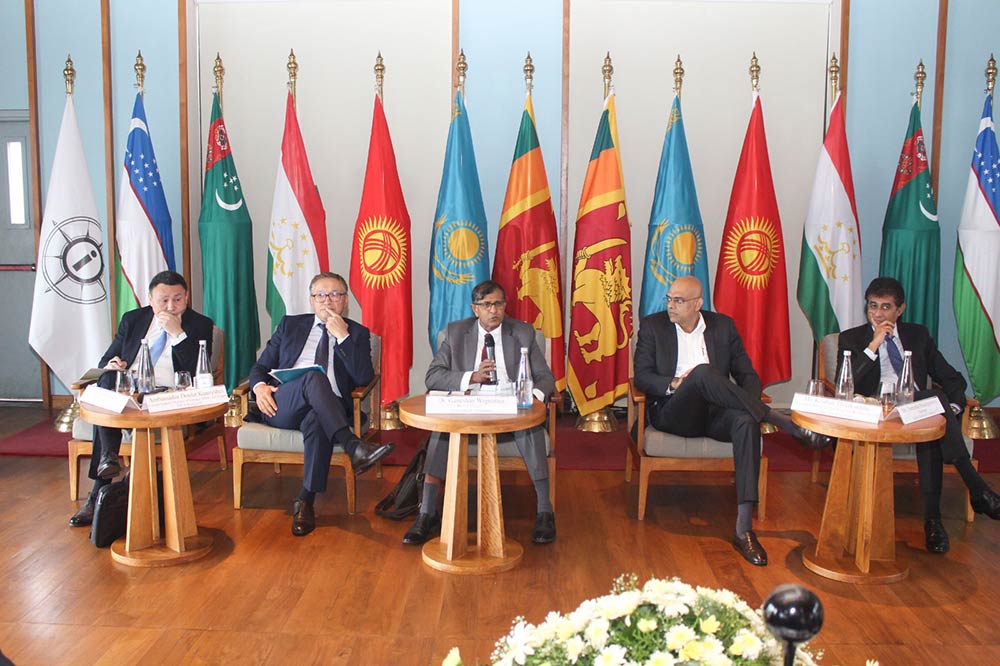
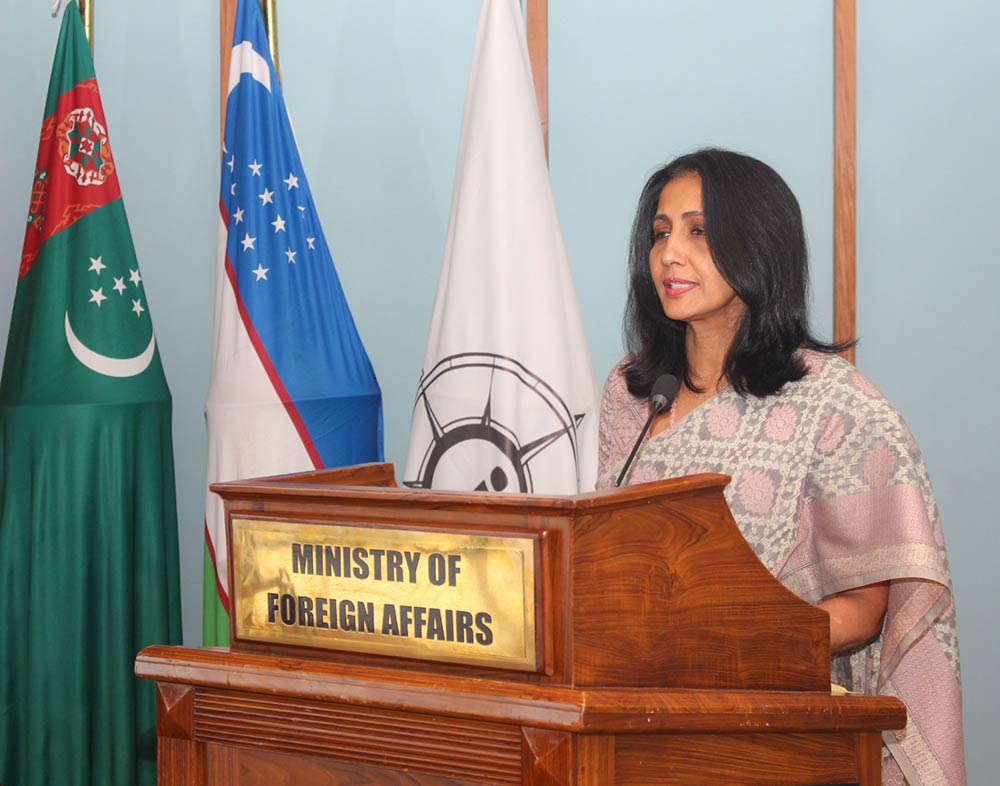
On Wednesday, August 21, 2024, the Ministry of Foreign Affairs in Sri Lanka, together with The Geopolitical Cartographer, a Colombo-based think-tank specialising in the Indian Ocean, organised a forum on Central Asia. The event took place in two sessions, one in the morning focusing on transport and logistics in Central Asia and another in the evening centring on economic ties. Both were overseen by the Ministry’s Central Asia and South-East Asia Affairs Division and attended by academics, diplomats, and Ministry officials.

The Forum, which was also attended by the Minister of Foreign Affairs, took place against the backdrop of a series of consultations that the Ministry organised with governments of Central Asian countries in 2023 and 2024. The latest of these, with Turkmenistan, happened in May this year. A month earlier, the Ministry held consultations in Astana, Uzbekistan, where both sides agreed to set up Embassies. Sri Lanka is presently accredited to the region through diplomatic missions in India, Pakistan, and Russia.

Sri Lanka’s motives in Central Asia

Colombo has been eyeing Central Asia for quite some time. Between 2011 and 2021, it sent delegations to Uzbekistan and Kazakhstan. While these went some way in bolstering diplomatic relations and provided a basis for further engagements, they do not seem to have been followed up. In one sense, the latest round of consultations can be described as a second phase in Sri Lanka’s relations with the region, at a time when both Sri Lanka and Central Asia are recalibrating their foreign policies.

The war in Ukraine and tensions in the Middle East and Eurasia have forced the five Central Asian states – Kazakhstan, Uzbekistan, Turkmenistan, Tajikistan, Kyrgyzstan – into a delicate balancing act. While not outright endorsing Russia’s actions in Ukraine, they have been careful not to anger Moscow. Once part of the Soviet Union – which held the world’s sixth largest Muslim population – they have since evolved their foreign policy, which scholars typically refer to as “multi-vector” – essentially, a strategy of extending outward to as many regions and countries as possible without overtly taking sides.

At first glance, this appears to be Sri Lanka’s strategy too. Since the crisis in 2022, which saw a sitting president being unseated by angry protesters over queues and shortages, the government has been trying to chart a new course in its foreign relations. Given the scale of the crisis – the worst in Sri Lanka’s post-independence history – it has been compelled to prioritise some countries and deprioritise others while balancing them with one another. India remains at the top of the list, while China – which, since 2007, lent extensively to Sri Lanka, even if one disregards the lurid sensationalism of debt trap narratives – has taken a backseat. Engagements with the United States and its allies, over areas like humanitarian aid and even infrastructure development, have grown as well.

Second session – Central Asia Forum

There are obvious differences between Central Asia and Sri Lanka. Central Asia is a heavily landlocked region, while Sri Lanka is a small island-state. Yet there is some congruence in the security pressures governing the foreign policy of these countries: Central Asia from Russia, Sri Lanka from India. Following the dissolution of the Soviet Union in 1991, the region underwent a period of economic restructuring. These generated mixed results, with some countries recording growth and others plunging into recession.

After the September 11 attacks, Central Asia revived its ties with Russia, and in turn with the US, which at the time was close to Moscow and Vladimir Putin. Since 2010, however, the region has been expanding relations with China. The latter’s dramatic ascent since 2005 has convinced the region of the benefits of closer integration with Beijing, vis-à-vis transport networks such as the Trans-Caspian Route. That has consolidated bilateral trade, which has grown from USD 25.9 billion in 2009 to almost USD 90 billion in 2023.

Central Asia has also become a strategic consideration for Western powers. In the US, the Biden administration has been trying to forge closer ties with the region. This has become important following Russia’s invasion of Ukraine.

After the invasion of Afghanistan, which borders Central Asia, in 2001, Washington built military bases and expand security cooperation with these countries.

However, the region experienced a fallout from the Bush administration’s interventions in the Middle East. That soured relations between Central Asia and the US. According to one analyst, the Biden administration is now using Ukraine as a ploy to restore those relations. It remains to be seen whether such tactics will work.

In all this, Central Asia has been prioritising its autonomy. Thus, while maintaining ties with Russia, it is also reaching out to China through platforms such as the Shanghai Cooperation Organisation (SCO), which held its most recent summit in July. At the same time, while voting in favour of Palestine at the United Nations, the region, Kazakhstan in particular, has been maintaining ties with Israel. A recent study shows that Central Asia has increased interactions with other countries from 60 in 2015 to 158 in 2023. Such strategies are typical of states engaged in balancing acts, including Sri Lanka.

In the early 2000s, the US invasions of Afghanistan and Iraq and the resulting fallout pushed Central Asia into other regions. These included South Asia. Initially covering Afghanistan, Pakistan, and India, Central Asia has now expanded to Dhaka. India has responded positively to these developments. In 2012, the Manmohan Singh administration held the first India-Central Asia Dialogue in Bishkek. Under Narendra Modi, such interactions have widened. Pertinently, platforms like the SCO have provided opportunities for India as well as China, to say nothing of countries like Türkiye, to consolidate ties with the region.

Foreign Secretary Aruni Wijewardene

The gambit: Opportunities and challenges

Given the many parallels in the foreign policies of Central Asia and South Asia, in particular India, does Sri Lanka’s Central Asia gambit make sense? Without overlooking the obvious differences – in size and potential – between them, it must be noted that Central Asia and Sri Lanka have both been guided by two imperatives: a balancing act on the one hand and a more long-term “extending outward” strategy on the other. For Sri Lanka, the balancing act has played out between India, China, and the US. For Central Asia, it appears to be playing out between China and Russia, even if the latter two are too intertwined to let ties with one region, even of mutual strategic importance, overdetermine everything else.

Sri Lanka and Central Asia thus seem to be placed in a positive conjuncture, a crossroads in their histories, that has made a strategic alliance both feasible and plausible. While the 2011-2021 round of consultations took place against the backdrop of the end of the 30-year war and the need to boost foreign investment, Colombo did not feel an urge to reach out to other regions: it was able to secure largesse from Beijing to finance its huge infrastructure projects. It also issued large volumes of ISBs. Now, with both China-funded projects and ISBs coming to a standstill, it is trying to resume from where it left off.

But are strategic alliances enough to sustain bilateral ties in the longer term? At the August conclave, Director-General of the Central Asia and South-East Asia Affairs Division of the Sri Lankan Foreign Ministry Sashikala Premawardhane highlighted several sticking points in the country’s ties with Central Asia. Top among them was trade.

Uditha Devapriya is the Chief International Relations Analyst at Factum, an Asia-Pacific focused foreign policy think-tank based in Colombo, Sri Lanka. He studied at the Bandaranaike Centre for International Studies (BCIS), from where he graduated in 2023. His thesis, supervised by Dr Chulanee Attanayake, was on Sri Lanka Central Asia relations. It won the Prize for the Best Dissertation that year.


from The Island https://ift.tt/MST8y0W

President opens “The Mall” Duty-Free shopping complex in Colombo Port City

President Ranil Wickremesinghe officially opened “The Mall,” a newly constructed duty-free shopping complex within  the Colombo Port City area today (September 5).

This marks the debut of the first urban duty-free shopping mall in the region, featuring a range of stores, restaurants, and various retail outlets. Notable international duty-free retailers, including One World, China Duty Free Group (CDFG), and Flemingo will be operating within the mall, positioning the Colombo Port City as a premier shopping destination.

Following the unveiling of a commemorative plaque and the official opening, the President embarked on an observation tour of the new complex.

  Addressing the gathering, President Ranil Wickremesinghe further elaborated;

The inauguration of this duty-free centre in the Port City today marks a significant milestone. Our tourism industry has now gained global prominence, attracting visitors who are drawn to this new shopping complex. The development of shopping malls in the Port City is a key part of our strategy to enhance the region’s appeal and provide goods for tourists. This represents the beginning of a new era for the Port City.

Two years ago, the prospect of such development seemed improbable. However, we have made this progress possible through our efforts to establish economic stability, with crucial support from the IMF. Our agreements with the IMF, the World Bank, the Asian Development Bank (ADB), and 18 lending countries have been instrumental in advancing this program. Maintaining these agreements without alterations is essential for securing a prosperous future for our country. Any attempts to modify these agreements could jeopardize our on-going progress and future prospects.

Approximately 100 companies are currently directing their attention towards the Port City. Of these, 74 companies are expected to arrive in Sri Lanka by the end of this year. Additionally, a new tourist zone will be established in Colombo Fort, which is anticipated to increase the number of visitors to these areas.

The police headquarters has been relocated, and the Foreign Ministry is moving to a new building. Plans are underway to renovate the Republic Square and construct new buildings in its centre, aiming to develop the area into a tourist zone. The old post office building will also be utilized to advance the tourism industry. The old port and its jetty, as well as the old customs building, will be repurposed for tourism.

The naval headquarters has been relocated to Akuregoda, creating opportunities for new hotel developments in that area. The current President’ House will also be leveraged to expand the tourism sector, with plans to create a robust tourism industry there.

To develop the country, it is essential to attract a larger number of tourists and increase the revenue generated from them. We should take pride in being able to initiate such a shopping complex within two years. Three renowned global companies have already established themselves within a 7,000-square-meter area, with more expected to arrive. We are committed to securing the country’s economic stability and advancing the Port City to become a globally recognized centre.


from The Island https://ift.tt/MwJetk4