Monday, August 3, 2026

One voice, two styles

Some songs you listen to while others listen to you and Nilanka Anjalee’s new release ‘Kolamba Ahasa Yata’ does both.

Released on 10 July, 2026, this is the fourth original song and music video from Nilanka Anjalee — singer, songwriter, and medical doctor.

Written and composed by Nilanka herself, the Sinhala track dares to tell a story we rarely hear sung with such empathy: the inner life of a woman who leaves her village for Colombo, hoping for a better life.

But ‘Kolamba Ahasa Yata’ isn’t about the city lights. It’s about what happens, underneath them.

The song follows a sex worker caught between two selves. One self tries to wear the city’s “poshness” like armour — even as society looks down on her. The other still aches for the simplicity, innocence, and belonging she left behind in her village.

And Nilanka sings both women.

That’s where the magic lives. In one verse, her voice glides with the smoky ache of Western jazz and blues — worldly, tired, defiant. In the next, it softens into an Eastern lilt — fragile, homesick, pure. It’s one voice, but two styles. Two lives in one song.

Producer and arranger Dushan Jayatilake, formerly of The Gypsies and now with LunuDehi, mirrors that duality in sound. He layers two distinct musical palettes and instruments, so the city and the village almost argue with each other in the background.

The music video drives the point home. Talented dancer and actress Dr. Gihani Jayawardena portrays both versions of the woman — moving between them in a performance that’s as heartbreaking as it is graceful.

There’s a reason the storytelling feels so sensitive. Both Nilanka and Gihani are medical doctors. Their training in medicine and the humanities brings a rare depth to how they explore psychology, stigma, and identity. This isn’t exploitation. It’s understanding.

Nilanka Anjalee herself is no stranger to discipline and art. Western classical trained, she holds an LTCL in Singing and an ATCL in Piano from Trinity College London. Yet with ‘Kolamba Ahasa Yata,’ she steps far beyond technique — into truth.

You can find Nilanka’s originals and covers on Facebook, Instagram, and YouTube, under Nilanka Anjalee.


from The Island https://ift.tt/gV3j6KE

Australia dominate Glasgow 2026, Sri Lanka finish 17 in the medals table

After 10 days of action across 10 sports, a grand total of 215 gold medals have been handed out at Glasgow 2026.

‎Australia have dominated the medal table, winning 70 golds – 16 more than the combined total of England, hosts Scotland, Wales and Northern Ireland put together – and 171 medals overall.

‎Sri Lanka finished joint 17th in the medals table alongside Jersey and Samoa thanks to the Gold medal won by Rumesh Tharanga in the men’s javelin throw and the silver won by Para athlete Palitha Bandara in the F42-44/F61-64 category discuss throw.

‎England finished second with 29 golds, ahead of Canada and India, while Scotland (13 golds) were fifth, Wales ninth (nine golds – four of them belonging to cyclist Emma Finucane) and Northern Ireland 12th (three golds).

‎In all, 45 nations or territories out of 74 won medals.

‎Australia won a staggering 37 gold medals and 76 in total in the swimming pool, with Meg Harris leading the way with six individual golds.


from The Island https://ift.tt/9cvJa5o

Sunday, August 2, 2026

Winds of Change: Geopolitics at the crossroads of South and Southeast Asia

Book Review

By Kasuni Ranasinghe

In an era defined by intensifying great-power competition, shifting alliance structures, and the reconfiguration of regional order, Asanga Abeyagoonasekera’s Winds of Change: Geopolitics at the Crossroads of South and Southeast Asia offers a comprehensive and timely account of the forces reshaping the Indo-Pacific. Published by World Scientific in 2026, the book brings together the author’s two decades of experience at the intersection of foreign policy, national security, and strategic advisory roles in Sri Lanka — including as Founding Director General of the Institute of National Security Studies Sri Lanka and Executive Director of the Lakshman Kadirgamar Institute. Abeyagoonasekera currently serves as Executive Director of the South Asia Foresight Network under the Millennium Project in Washington, DC, and as Technical Advisor to the International Monetary Fund. This depth of practitioner experience lends the book an analytical texture that enriches its theoretical engagement and grounds its regional observations in the realities of contemporary statecraft.

Overview of the Work

The book is organised around four central themes: the geopolitics of China’s Belt and Road Initiative (BRI); India–China regional diplomacy under Prime Minister Modi; broader geopolitical power rivalries involving the United States and its Indo-Pacific strategy; and Sri Lanka’s evolving domestic political landscape following the 2024 election of President Anura Kumara Dissanayake — the country’s first Marxist-leaning leader. These themes are explored across a wide regional canvas encompassing Thailand, Cambodia, Singapore, Vietnam, Bangladesh, Pakistan, the Maldives, Nepal, and Sri Lanka, rendering the work one of the most panoramic assessments of South and Southeast Asian geopolitics in recent years.

A defining feature of the work is its use of classical geopolitical theory to illuminate contemporary dynamics. Drawing on Nicholas J. Spykman’s Rimland thesis alongside modern international relations (IR) thinkers, the author argues that control over the maritime and littoral periphery of Eurasia — including the Indian Ocean, the Bay of Bengal, and the Malacca Strait — remains central to 21st-century great-power competition. This theoretical lens provides a coherent framework for understanding why South and Southeast Asia have become the primary arena in which the strategic ambitions of China, India, and the United States converge and collide.

Theoretical Grounding in International Relations

Abeyagoonasekera engages with several established theoretical frameworks from IR scholarship to interpret regional behaviour. The realist tradition, particularly structural realism as articulated by Kenneth Waltz and later John Mearsheimer, undergirds much of the book’s analysis. States in South and Southeast Asia are depicted as rational actors responding to the distribution of power in the international system, engaging in balancing and hedging strategies to safeguard their sovereignty and interests. The persistent India–China rivalry, the arms build-up across the region, and the competition for strategic port access and maritime dominance are all interpreted through this realist lens, wherein power, security, and survival remain the primary motivators of state behaviour.

The book also draws upon neoliberal institutionalism to make sense of the BRI as a vehicle of economic interdependence and connectivity. Abeyagoonasekera’s analysis suggests that China’s infrastructural diplomacy reflects a broader logic of creating interlocking economic relationships that make cooperation mutually beneficial and defection costly for smaller partner states. This reading aligns with liberal IR theory’s emphasis on institutions, trade, and interdependence as mechanisms of order-building — a perspective that adds important nuance to reductive portrayals of Chinese engagement in the region.

Perhaps the most analytically productive theoretical thread running through the work is the concept of “hedging,” developed by scholars such as Evelyn Goh and Cheng-Chwee Kuik to describe the risk-minimisation strategies of small and middle powers caught between competing great powers. Rather than fully aligning with either China or the United States, the majority of South and Southeast Asian states discussed in the book pursue portfolios of engagement — maintaining economic ties with Beijing while preserving security partnerships with Washington and New Delhi. This hedging dynamic is illustrated most vividly through the case of Sri Lanka, whose foreign policy navigates between competing centres of gravity with notable strategic flexibility. Abeyagoonasekera’s use of this framework allows the book to move beyond a binary “China versus the West” reading of regional geopolitics toward a more nuanced appreciation of how agency operates even under conditions of structural constraint.

Relevance to South Asian Geopolitics

The book’s most sustained and original contribution lies in its treatment of South Asian geopolitics, a domain that has historically received less rigorous scholarly attention than the great-power competition it hosts. Abeyagoonasekera convincingly demonstrates that South Asia is no longer merely a theatre of proxy competition between China and India; it has become an active site of agency, where smaller states exercise meaningful strategic choice even under structural pressure. The cases of Bangladesh, Nepal, and the Maldives illustrate this point well, as each government has at different moments pivoted between Indian and Chinese influence in ways that reflect domestic political calculations as much as external imperatives.

Sri Lanka occupies the analytical centrepiece of the book, and with good reason. As a small island nation at the confluence of the Indian Ocean’s major sea lanes, Sri Lanka crystallises the dilemmas facing South Asian states more broadly. President Dissanayake’s inaugural state visit to China, which secured USD 3.7 billion in foreign direct investment, is read by the author not merely as a transactional diplomatic moment, but as a signal of the broader ideological and economic repositioning that post-crisis Sri Lanka is navigating. This development raises important questions about India’s “Neighbourhood First” policy and the extent to which New Delhi’s regional influence is being tested by the depth and scale of Chinese economic engagement.

The book is equally attentive to India’s own foreign policy ambitions under Modi, situating them within a broader strategy of regional primacy and strategic autonomy. Abeyagoonasekera traces how India’s engagement through the Quad, its infrastructure investments under the Security and Growth for All in the Region (SAGAR) framework, and its connectivity diplomacy across South Asia represent a coherent effort to consolidate its position as the pre-eminent regional power. Yet the author acknowledges the limits of this influence in economies where Chinese capital has secured deep structural footholds, and this tension between Indian aspiration and Chinese penetration in South Asia is one of the book’s most analytically rich themes.

The United States’ Indo-Pacific strategy enters the analysis as the third pole of the regional order. The book examines how American strategic frameworks position the region as a domain of democratic values and rules-based international order, and raises the consequential question of whether a renewed Trump presidency could accelerate a reorientation of the global order toward Beijing. For South Asian states that have calibrated their hedging strategies around the assumption of sustained American engagement, this scenario carries profound implications and Abeyagoonasekera handles it with appropriate analytical seriousness.

Conclusion

Winds of Change is an intellectually engaging and empirically rich contribution to the scholarship on South and Southeast Asian geopolitics. By weaving together classical geopolitical theory, realist and neoliberal IR frameworks, and the concept of small-state hedging, Abeyagoonasekera provides readers with a layered understanding of how a volatile region is navigating the defining power competition of the 21st century. The book’s particular strength lies in its grounding in Sri Lanka as a case that crystallises the tensions, trade-offs, and strategic choices facing all South Asian states as they simultaneously manage relationships with China, India, and the United States.

For scholars of international relations, South Asian politics, and Indo-Pacific security, this volume is essential reading. It is equally accessible to graduate students, policymakers, and informed general readers who seek to understand the forces driving one of the world’s most consequential and contested geopolitical regions. As the winds of change continue to reshape the international order, Abeyagoonasekera’s account serves as both a valuable analytical record and a provocation for further scholarly inquiry.

Reference

Abeyagoonasekera, A. (2026). Winds of change: Geopolitics at the crossroads of South and Southeast Asia. World Scientific Publishing.

Kasuni Ranasinghe is a research student at Macquarie University, whose academic path includes a Master of Education from the University of Melbourne, a Master of International Relations from the University of Colombo, and a Bachelor of Arts from the University of Kelaniya. She was a former Research Analyst at the Institute of National Security Studies Ministry of Defence Sri Lanka


from The Island https://ift.tt/ScGbvsC

Saturday, August 1, 2026

The Last Cocktail PartyTerry Jonklaas and the Making of Modern Ceylonese Interiors

From the Pathfinder Collection:

By Jennifer Moragoda

Made by Terry

In the 1950s and early 1960s, Terry Jonklaas was Ceylon’s most fashionable and sought-after interior designer. To own a piece of furniture “made by Terry” was to signal modern taste, affluence and social standing. Affluent families commissioned him to furnish the home of a newly married daughter; others acquired a single piece of furniture or a decorative object from his Galle Face Court showroom. Commercially astute, he offered different points of entry while preserving the exclusivity of his name, translating his personality into objects, interiors and a distinctive way of living. Yet this once-famous designer has largely disappeared from Sri Lanka’s history of modern design, even as many of his objects—and the forms he helped popularize, widely imitated from the outset—remain hidden in plain sight.

The Decorators and Furnishers, which Jonklaas headed at No. 1 Galle Face Court, became synonymous with innovative design, fine materials, exceptional workmanship and high prices. Its furniture and imported European glassware and tableware carried considerable social cachet. One grandson recalls his grandmother, whose residence Jonklaas had custom-furnished, becoming anxious whenever he and his brother did their homework at her dining table, fearing they might scratch its teak surface. In another family, a son remembered how unfamiliar Jonklaas’s designs seemed beside the traditional furniture his mother had inherited. After purchasing a modern living-room ensemble, she would proudly inform visitors that the settee on which they were about to sit was a Terry Jonklaas creation.

The world he inherited

Terence Powell “Terry” Jonklaas was born in Kandy in 1919 and boarded at St. Thomas’ College, Mt. Lavinia, from the age of nine. He excelled at English, swimming and diving, though he “disliked school intensely,” calling it “a journey to another planet.” The youngest of six brothers, ten years younger than the next eldest, he developed a playful, irreverent streak.

Terry Jonklaas belonged to the tenth generation of an established Dutch Burgher family that could trace its ancestry in Ceylon to the earliest Dutch arrivals in the seventeenth century. His family had been based in Kandy for at least two generations and was firmly embedded in the colonial establishment; its members included eminent lawyers, civil servants and planters. This background matters less as genealogy than as an indication of the social position he inherited and the cultural assumptions it fostered. His secure place within this established milieu contrasts with the more hybrid identities of Minette de Silva and Geoffrey Bawa, for whom questions of cultural belonging became more explicit professional concerns.

His maternal cousin George Keyt, a founding member of the ’43 Group, was likewise raised in Kandy and was about ten years older. Between 1946 and 1949, Jonklaas was invited to exhibit with the ’43 Group as a guest artist in four exhibitions, receiving mixed but sometimes revealing notices. One critic detected “a definite bias for the macabre and a certain cynicism,” while another described his technique as “bold and carefree.”

A large oil painting by Jonklaas of a male and female nude still hangs above the bar he designed for his close friend Sir John Kotelawala at Kandawala. It may be The Lovers, listed in the catalogue of the 1946 exhibition.

The catalogue for the ’43 Group’s 1947 exhibition also contains the earliest reference so far located to The Decorators and Furnishers, listing “WOOD CARVINGS by Decorators and Furnishers.” Jonklaas later placed prominent advertisements in ’43 Group exhibition catalogues and in the catalogue for Aubrey Collette’s 1955 Faces exhibition.

After a short stint at the Times of Ceylon as a cub reporter, he joined the Ceylon Tobacco Company, which sent him to Central Java, where he remained until war appeared imminent. He later spent two years at Edwards, Reid & Begg, although the nature of his training there remains unclear.

A pleated Le Klint lampshade at Lunuganga. The Danish firm’s lighting was sold by The Decorators and Furnishers from 1957. (Photo: Jennifer Moragoda)

Terry Jonklaas, MBE, interior designer, at work, 1950. (Courtesy of The Observer)

By at least 1947, Jonklaas had established a considerable reputation. Thilo Hoffmann recalled that, after his marriage, he and his wife moved into their first home, a small flat in the Baurs building. It was barely furnished, apart from a few pieces designed by Jonklaas, whom Hoffmann described as “a then leading designer.” By 1951, Jonklaas had been admitted as a Member of the Society of Industrial Artists (SIA), Britain’s first professional body for designers. In 1956, aged thirty-six, he was appointed a Member of the Order of the British Empire (MBE) for his work in interior design.

The business of modern living

Jonklaas served as managing director of The Decorators and Furnishers, founded in 1947. He was its creative engine and public face—in effect, the brand itself. His partners provided the financial backing, connections and social imprimatur needed to sustain the enterprise. Sir Chittampalam Gardiner was chairman, while R. P. Senanayake, N. Sellamuttu, S. Sellamuttu, Sellamuttu Somasunderam and Kurban Adamally served as directors. Notably, the company was the only Ceylonese design firm to be a member of the Design and Industries Association of Great Britain.

Jonklaas travelled regularly to European design exhibitions, including the Milan Triennale, where he cultivated relationships, secured sole agency agreements with prestigious firms and kept abreast of new products, forms and materials.

Many remember visiting the showroom at No. 1 Galle Face Court, whose broad frontage displayed Jonklaas’s furniture alongside contemporary European lighting, glass, tableware and gifts. Modernity could be viewed through the window before it was purchased for the home. Manik de Silva recalled furniture unlike anything he had seen, while Shanth Fernando remembered a black metal vase lacquered orange inside, Clancy glass, Lalique, Steuben and Jonklaas chairs with brass-tipped legs; his mother once had one of the designer’s cane chairs copied.

For contemporary readers, Jonklaas’s influence might be compared—despite differences in period and design vision—to that of Shanth Fernando and Paradise Road. Each changed the visual culture of domestic life in Sri Lanka, making a new form of contemporary living desirable and recognizable. Jonklaas gave material form to the relaxed sociability emerging around Independence: a pre-air-conditioned world of home bars, dining rooms, verandahs and gardens, clubs, race meetings and entertaining, where growing informality coexisted with rituals of dress, status and display.

The Decorators and Furnishers became a destination for prestigious wedding gifts and introduced Ceylonese buyers to European lighting, glass, ceramics and tableware. At a time when interior design was only beginning to emerge as a distinct profession, Jonklaas designed furniture, lighting and furnishings; worked with timber, cane, metal, glass and new industrial materials such as rexine, plastics and Formica; and undertook commissions for offices, exhibitions, kitchens and entire houses. His customized pieces and recurring design flourishes were tailored to the personalities and social lives of his clients.

The interiors he designed for Mubarak Thaha offer a vivid example. Thaha was a well-known figure with interests in Colombo clubs and horse-race betting. The eight-foot-long bar occupied the space beneath a staircase. Nearby stood elongated swivel chairs with moulded high backs, upholstered in saffron-yellow corduroy and supported on cast-iron pedestal bases, alongside locally made interpretations of the Barcelona chair. The imposing curved bar was faced with panels of speckled Formica edged in brass; a brass foot rail ran along its base, while the countertop, raised on recessed iron supports, appeared to float above the structure. The bartender’s side was as carefully resolved as the public face, with finely finished solid-teak carpentry. As a final flourish tailored to the owner, Jonklaas designed a plaster-of-Paris horse’s head for the counter-top.

The commission shows how he combined materials, function and character to create an interior suited to the life of the room and the personality of its owner. His advertising was equally integral to the enterprise: in newspapers and exhibition catalogues, Jonklaas’s name received billing equal to that of the firm.

The Jonklaas idiom

Jonklaas’s furniture belonged confidently to international post-war modernism, part of a wider shift away from ornately carved antique furniture that evoked walauwa living and claims to pedigree, status and tradition.

He introduced a lighter, more informal sensibility in which form, proportion and material took precedence over applied ornament. Wall-mounted construction, slender recessed legs, metal stems, splayed supports, rounded corners, cantilevered tops and thin profiles made many pieces appear to float. Sideboards, cabinets, tables and upholstered furniture shed visual weight, allowing space to flow beneath and around them. Curves softened their volumes, while meticulous finishes and the grain of Burma teak, naedun, tamarind, jak, satinwood and ebony provided richness and distinction.

His work drew more strongly on an international modernist vocabulary than on recognizably traditional Ceylonese forms. Yet this break with traditional form did not mean a break with traditional skill. His designs depended upon Ceylonese carpenters, furniture makers, cane-workers, brass workers and ironsmiths, who translated modern ideas into finely finished workshop-made objects.

Cane ensemble designed by Jonklaas for Aubrey Collette in the 1950s. (Courtesy of Cresside Collette)

His originality lay in how he made post-war modernism his own: through combinations of local and imported materials, exceptional craftsmanship, practical ingenuity and humour. Machine-made brass-plated edging and industrial fittings became decorative details, while his trademark brass “socks,” capping conical legs, were widely copied. Formica faced bars and sideboards; coloured glass slag was used in garden lanterns; tiles enlivened table surfaces; and imported glass shades became complete lighting designs through locally made fittings.

The limitations of available materials and small workshops often encouraged invention. Jonklaas substituted cast iron for industrially produced chrome and steel, and repurposed ordinary metal washers as feet beneath splayed chair and table legs. Swivel chairs were created by mounting the seat on a central rod inserted into a hollow base.

A teak dressing cabinet designed for N. U. Jayawardena’s Cambridge Place house demonstrates Jonklaas’s fine finishes and playful ingenuity. Closed, its sleek fluted facade and elongated brass handles form a solid floating block. Opened, mirror-faced doors frame a central mirror and reveal a working surface with drawers and a concealed compartment below. The compartment revolves through 180 degrees, bringing its contents within reach before returning them neatly out of sight. A small round stool on castors can be parked beneath the cabinet. Like much of Jonklaas’s best work, it is playful and beautiful, yet governed by function and economy of space.

N. U. Jayawardena’s Cambridge Place house, designed by Ulrik Plesner, 1959–60. (Courtesy of Ismeth Raheem)

His irreverent, slightly perverse humour is captured in a pair of ceramic salt-and-pepper shakers from a series he designed for the Danish company A/S Rafa and sold under its Nymølle brand. Two complementary conical forms become hooded monks in cassocks, their toes peeking from beneath their robes. Their shapes allow them to be arranged in different configurations: seen in profile, they appear to proceed solemnly to Mass; only when turned to face the viewer are their true characters revealed. One hunches forward with clasped hands and a disapproving frown; the other, with shifty eyes, sniggers. The joke continues in their use: each figure must be grasped by the neck, inverted and shaken to dispense the salt or pepper.

Modernism at ease

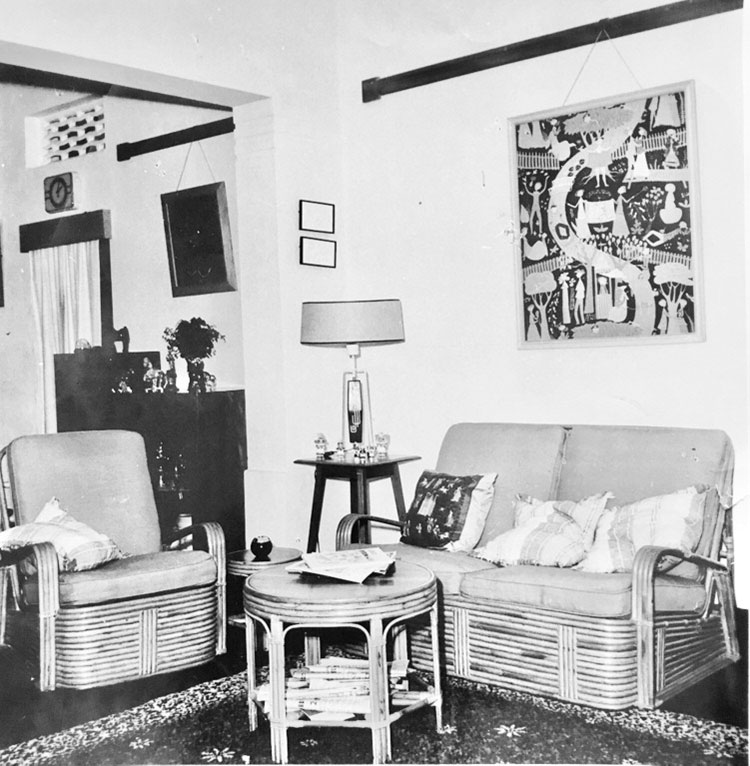
Cane and rattan, comparatively affordable materials, offered another expression of relaxed living and entertaining. Jonklaas helped make cane furniture respectable enough to move from the verandah into the drawing room. The ensemble he designed for his friend Aubrey Collette in the 1950s is a particularly elegant example: thick bands of rattan wrap around the settee and armchairs, forming their bases in place of conventional legs.

The now-ubiquitous leather-and-cast-iron butterfly chair offers another example of Jonklaas’s role in popularizing modern designs. Sharya Scharenguivel, daughter of his client and close friend ChloĂ© de Soysa, recalled that within their circle it was known as the “Jonklaas chair.” Created in Buenos Aires in 1938 and copied worldwide, it became associated in Sri Lanka with Geoffrey Bawa and Ulrik Plesner through published photographs of their interiors. Jonklaas’s possible role in its local circulation is less known. Today, inexpensive versions are sold along the Kandy Road, their popularity owing to their comfort and ease of fabrication.

Furniture finds its architecture

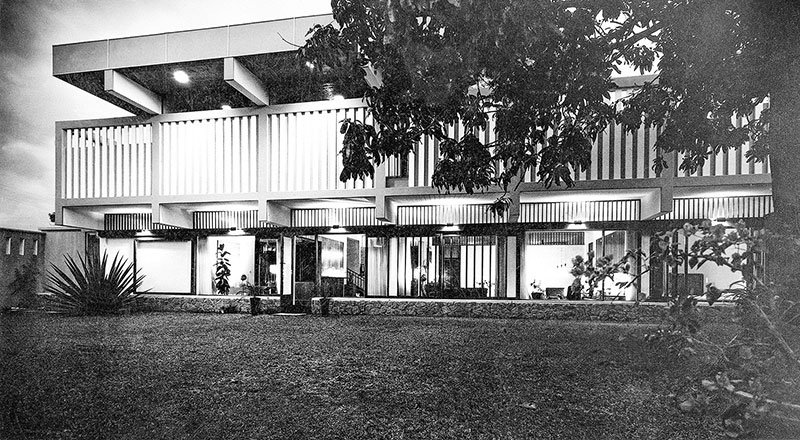
Jonklaas’s furniture found perhaps its most perfect architectural setting in N. U. Jayawardena’s Cambridge Place house, built in 1959–60. Designed by the Danish architect Ulrik Plesner, it was radically modern for Colombo: a rectilinear, strongly horizontal structure with grass-covered roof terraces at a time when pitched roofs were still the norm. The upper storey appeared almost to float above a transparent ground floor, where a broad bank of teak-framed sliding glass doors opened directly onto the garden, revealing the carefully integrated interiors.

The commission brought Jonklaas into contact with an architect who possessed an unusually intimate understanding of furniture and craftsmanship. Plesner had apprenticed in carpentry during his education in Copenhagen and was the stepson of Kaare Klint, a foundational figure in modern Danish furniture design.

During the same period, Jonklaas also designed most of the furniture ensembles for Aelian Kannangara’s residence, designed by Geoffrey Bawa. Its architecture bears striking affinities with the Cambridge Place house.

Hidden in plain sight

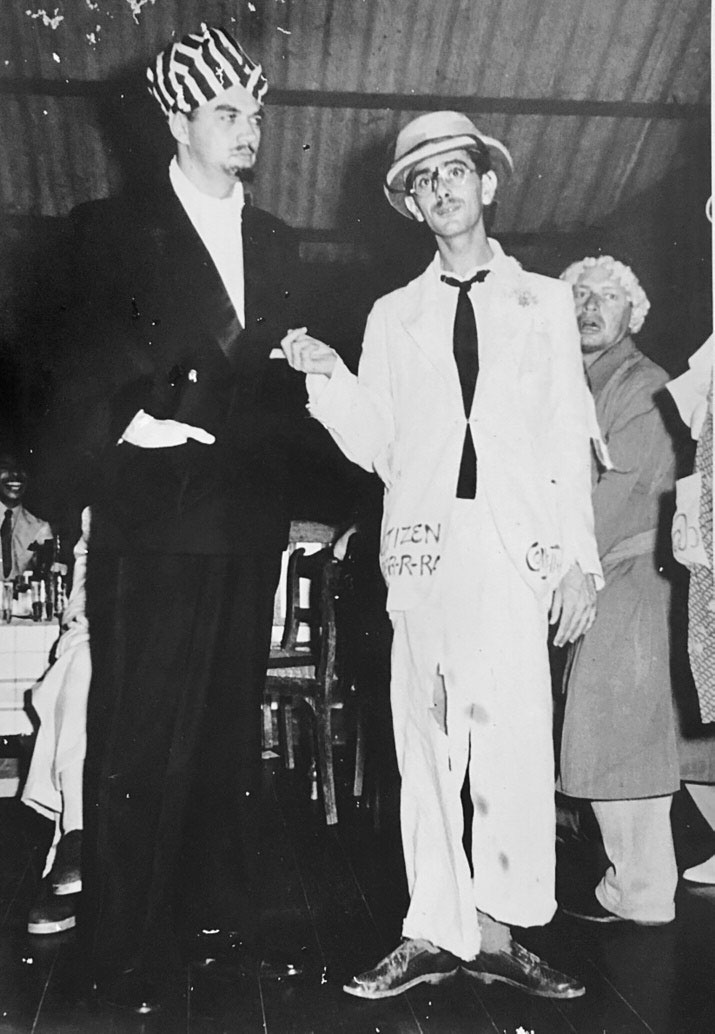
Terry Jonklaas as Citizen Perrra and Aubrey Collette as Mandrake the Magician at Havelock Golf Club. (Courtesy of Cresside Collette)

Jonklaas’s Ceylonese career lasted barely 16 years, from about 1947 to 1963. His interiors and furniture were seldom systematically documented, while ensembles in private houses were divided among descendants or dispersed through auction, often losing their provenance. Yet the simple silhouettes, teak and rattan, and relaxed informality he helped make acceptable have returned to fashion. His pieces blend seamlessly into contemporary settings even as their authorship remains largely unrecognized.

The last cocktail party

The loss of Jonklaas’s name followed the dispersal of the social world that had sustained it.

Aubrey Collette, My Very Last Cocktail Party, c. 1961. (From The Times of Ceylon)

He was remembered as gregarious, approachable and mischievous. Very tall and fair, he was an immediately recognizable presence. He bonded with clients over gardens, entertaining, travel and antique hunting, and many were or became close friends. Friends recalled his practical jokes, including an occasion when he scattered vegetables just inside the entrance gate of Cecil and ChloĂ© de Soysa’s home; the family immediately knew who was responsible. He moved easily among prominent Burgher, Sinhalese, Tamil and Bohra families.

These networks were essential to an interior designer whose work depended upon trust and the willingness of clients to admit him into the intimate process of making a home. Access to them, however, was often restricted by class, ancestry and family standing.

One of his closest friends was Aubrey Collette, Ceylon’s best-known political cartoonist and caricaturist. In a photograph taken at a fancy-dress party, Jonklaas appears in a shabby white suit bearing the name “Citizen Perrra,” while Collette is dressed as Mandrake the Magician—both characters from Collette’s cartoons. Jonklaas’s pose captures his position within society: a carefree participant, performer and amused observer.

Collette recognized, as did many around him, that this confident social world was nearing its end. In My Very Last Cocktail Party (c. 1960), he turned Colombo’s fashionable social set into a densely packed satire: British residents and members of the Ceylonese elite mingle as jaded, self-satisfied or faintly condescending figures, while a man in national dress stands visually apart. The old order, shaped by colonial privilege and sustained by narrow networks of class, language and family, could no longer assume its permanence.

This world should not be recalled only through nostalgia. Its intimacy, ease and cultural sophistication coexisted with exclusions and inequalities long ignored by those whom the system served. Political change widened access to power and altered the composition of social and professional networks, although it did not eliminate the importance of personal connections.

Collette left Ceylon in 1961. Jonklaas followed with his family in 1963 and continued working as a designer in Australia. For them, as for many Burghers of their generation, Australia offered another future as the assumptions governing their place in Ceylon began to change.

The last cocktail party was over. The friends dispersed, the houses passed to new owners, and the carefully assembled interiors were divided and sold. The name that had once guaranteed excitement, prestige and modernity gradually faded.

Yet the objects remain: a bar cabinet with intricate marquetry, a teak table floating above an iron frame, a brass-capped leg, a revolving drawer, a cane settee or a pair of mischievous monks. Through them, Jonklaas’s interiors—and Terry Jonklaas himself, once a household name—can begin to be seen again.


from The Island https://ift.tt/z0NfqSB

Friday, July 31, 2026

INSEE secures top honours at Sri Lankan Sustainability Awards 2026

INSEE Lanka, Sri Lanka’s only fully integrated cement manufacturer and market leader, with flagship brands INSEE Sanstha and Mahaweli Marine Plus, secured prestigious top honours at the Sri Lankan Sustainability Awards 2026 recently, in collaboration with the 14th World Construction Symposium organized by the Ceylon Institute of Builders (CIOB), at Hilton Colombo.

The recognition builds on INSEE’s sweeping success at last year’s CIOB Sustainability Awards 2025, where the company was recognised across multiple categories.

In 2026, INSEE was once again named ‘Sustainable Organization of the Year’, for the second consecutive year, demonstrating a strong commitment to embedding sustainability in every facet of operations. The company’s flagship brand, INSEE Sanstha Cement, also received ‘Sustainable Cement Brand of the Year’ for the second year running, reinforcing its position as Sri Lanka’s most trusted and environmentally responsible cement solution.


from The Island https://ift.tt/ED3r9Pt

Thursday, July 30, 2026

Judicial independence under threat

Dr Nihal Jayawickrama ✍

The Government has announced its intention to introduce a Bill to amend the Constitution to extend the retiring age of the Judges of the Supreme Court and the Court of Appeal by two years to 67 and 65 years respectively. While it would be quite legitimate to commence a conversation on the retiring age of Judges, the proper stage to do so is when a new Constitution is being drafted. An ad hoc mid-stream peremptory announcement that it would extend judicial tenure, will inevitably be viewed as an attempt by the Government to retain the services of one or more Judges whose retirement is due shortly. Such a perception will cause irreparable harm to the credibility of the judiciary.

No valid reason to change retiring age

There appears to be no immediate justification to increase the constitutionally mandated retiring age of 65 years of Judges of the Supreme Court. It is the same in many Asian countries – India, Pakistan, Nepal, Bhutan, Singapore, and 66 years in Malaysia. It makes little sense to argue that in the United Kingdom, where until recently the House of Lords was its highest court, Judges serve until the age of 75; or that in the United States they hold office for life. In many of the States in the US, judges are elected. Even the appointment of Judges to the Supreme Court is a political exercise, where the President recommends and the Senate confirms or rejects by a majority vote. In several South and Central American countries, the Chief Justice is elected by the Judges themselves for a specified rotating period. As elsewhere, our system is the result of our own constitutional evolution, and it would be foolish to attempt to replicate others’.

No support from serving Judges

It has been reported that the Judicial Officers Association has strenuously objected to any increase in their retiring age of 60. After over 25 or 30 years of wandering from one judicial division to another, they probably wish to settle down and enjoy family life. It is not known whether the Judges of the Supreme Court had requested an extension of their tenure. It seems unlikely that they had, because on retirement the extremely lucrative world of arbitration lies at their feet, in addition to receiving 90% of their salary in the form of a monthly pension. There is now a further incentive provided by a recent judgment of the Supreme Court itself that if a retiring Judge chooses to draw a commuted pension on retirement; i.e., an advance payment of a sum equivalent to, say, 50% of the monthly pension due to him in the first 24 months following retirement, that advance payment cannot thereafter be recovered by the government from his monthly pension because, according to that judgment, Article 108 of the Constitution states that the pension entitlement of a Supreme Court Judge shall not be reduced. That is, after taking a substantial portion of his future pension in advance, the State is nevertheless required to pay him the full pension thereafter; a loan which a retiring Judge is not required to repay; a privilege not accorded to judges of lesser rank or other members of the public service.

Judicial tenure to be determined in new Constitution

It is a fundamental tenet of judicial independence that a judge of the highest court should have a constitutionally guaranteed tenure. It could be for life, until a mandatory retirement age, or the expiry of a fixed term of office. That is a guarantee of judicial independence. The retirement age of Judges of the Supreme Court has always been determined at the stage of drafting a new Constitution. The 1947 Constitution of Ceylon specified that the retirement age of Judges of the Supreme Court shall be 62 years, but that the Governor-General “may permit a Judge who has reached the age of 62 years to continue in office for a period not exceeding 12 months”. Neither Sir Ivor Jennings who prepared the Ministers’ Draft, nor B.P. Peiris, the draftsman of the 1947 Constitution, has taken responsibility for that extension provision. It is, therefore, likely that it was inserted by the British Government, having regard to the interests of members of the Colonial Judicial Service who were serving on the Supreme Court at the time when that Constitution came into force.

When the 1972 Constitution was being drafted, it was decided to omit that discretionary power of the government to grant selective extensions of service to judges of their choice, although I am not aware of any such extension having ever been granted. Instead, the retirement age of Judges of the Supreme Court was fixed at 63 years.

The 1978 Constitution abolished the Supreme Court, replaced it with a new Supreme Court and a Court of Appeal, and from what Dr. Colvin R. de Silva has described as “the witches’ cauldron”, President Jayewardena picked out eleven Judges, distributed them to the two appellate courts, without regard to seniority, experience or age, excluded eight Judges, and then increased the retirement age of the chosen ones to 65 years and 63 years respectively. That is the position today.

Freezing the judicial sector

One consequence of the government’s proposed action is to freeze the judicial sector and thereby prevent any upward movement for judges of lower courts. Moreover, four vacancies in the Supreme Court and four vacancies in the Court of Appeal, have not been filled for several months. In the past, whenever a vacancy occurred, it was the invariable practice to fill that vacancy on the next day. In the Ministry of Justice, where I served for seven years, we would determine well in advance who would fill a vacancy immediately it occurs. The new Judge will be sworn in on the day following the retirement of his predecessor. The legal profession has never been as large in number as it is today. Consequently, the field of selection of new judges is enormous. To extend the tenure of serving judges is not only to deny the legitimate expectation of many for promotion in service, but also to frustrate the aspirations of hundreds of young lawyers who seek a career in judicial service.

Litigation expedited by reforming procedure

The government has expressed a bizarre argument that extending the tenure of serving judges is necessary to reduce the enormous backlog of cases, many of which had been instituted more than 25 or 30 years ago. That is a spurious argument, similar to that which I encountered over 50 years ago before we introduced the Administration of Justice Laws of 1973 and 1975.

Litigation is not expedited by establishing more courts and appointing more judges. Litigation is expedited by reforming the procedure. Reference to a Conciliation Board before proceeding to a court; evidence through affidavits instead of by examination-in-chief; a pre-trial conference; hearings from day-to-day with no postponements except in the event of a family bereavement, written submissions in the appellate courts and oral arguments limited to 30 minutes (as is the procedure in the United States Supreme Court), and the listing of appeals in the order in which they had been filed, were some of the procedural reforms which we introduced to expedite civil litigation. Similarly, the abolition of non-summary proceedings was just one of many procedural reforms in criminal cases. Research conducted by Dr. Neelan Tiruchelvam revealed that in three years, 53% of civil disputes had been resolved in Conciliation Boards, without the appearance of lawyers, and therefore did not reach the courts.

Discriminatory treatment of two Chief Justices

During both the presidential and general elections, the NPP promised to abolish the executive presidency and to restore parliamentary government under a new electoral system. That promise remains unfulfilled. On the other hand, if it was intended to extend the tenure of Judges of the appellate courts, why was a Bill not introduced for that purpose before eight Judges retired a few months ago? If the intention was to extend the tenure of the Chief Justice, why was that benefit not extended to Chief Justice Murdu Fernando who was appointed by, and retired during, this government?

A constitutional amendment now would lead one irresistibly to the conclusion that what the government seeks is to ensure that the present Chief Justice continues in office for two more years following the constitutionally mandated date of his retirement. In my view, that would be a blatant interference with the administration of justice in this country. The Bangalore Principles of Judicial Conduct, endorsed by the UN General Assembly, adopted by judiciaries on all the continents but ignored by the Sri Lankan judiciary, states that the discretional recognition of a judge’s judicial work by the executive jeopardises its independence.

An alternative option

Finally, I wish to conclude by offering an alternative option to the government which I would ordinarily not support. Some previous governments have succeeded in ignoring sound constitutional practice and securing the appointment as Chief Justice of candidates of their choice. For example, in 1955, Sir John Kotelawela secured the premature retirement of Chief Justice Sir Alan Rose, six years before the due date, to enable him to appoint Attorney-General Basnayake to that office. In 1974, Victor Tennekoon was appointed Chief Justice superseding four Judges who were senior to him in what Justice Minister Felix R. Dias

Bandaranaike described to me as “a Kandyan coup”. In 1977, President Jayewardena appointed his own personal legal adviser, Neville Samarakone as Chief Justice, ignoring the claim of Justice Samarawickrema who had by then served eleven years in the Supreme Court. In 1988, President Jayewardena again ignored the most senior Judge, Justice Wanasundera, and appointed Justice Parinda Ranasinghe as Chief Justice. In 1999, President Kumaratunge appointed Attorney-General Sarath Silva as Chief Justice, superseding five Judges who were senior to him when he had previously served four months on the Court. In 2013, President Rajapakse purported to appoint the legal adviser to the Cabinet, Mohan Peiris, as Chief Justice following the disputed removal of the incumbent, Shirani Bandaranayake, and ignoring the most senior remaining member on the Court. That leaves me with the question – would it not be a better option if the President were to let the present Chief Justice retire on the due date, and then find an individual acceptable to him from among the present Judges or from the Bar or from elsewhere, to serve as Chief Justice, instead of tinkering with the integrity of the Constitution?

Dr. Nihal Jayawickrama, a former Permanent Secretary to the Ministry of Justice, is the Rapporteur of the UN sponsored Judicial Integrity Group of Chief Justices which drafted the Bangalore Principles of Judicial Conduct and its 175-page Commentary, both of which have since been endorsed by the United Nations General Assembly and published in all six UN languages.


from The Island https://ift.tt/2iXshKx

El Niño threat looms large

Friday 31st July, 2026

The latest World Meteorological Organization forecast indicates that El Niño conditions, which are already underway, are likely to strengthen rapidly into a strong event over the next few weeks and persist through the end of 2026. The current outlook suggests a moderate but increasing possibility of adverse impacts on Sri Lanka. Attempts are being made in some quarters to underestimate the El Niño impact, but prudence demands that we prepare for the worst-case scenario.

Sri Lanka has earned notoriety for ignoring early warnings and waiting until disaster strikes to act. Politics has apparently taken precedence over economic and climate concerns these days. It is time for climate action.

Principal El Niño risks for Sri Lanka have been identified as water stress, drought, reduced agricultural production, food inflation, lower hydropower generation, heatwaves and economic losses. Proper planning is a prerequisite for countering these risks effectively.

Water shortages, reduced agricultural output and higher energy costs could increase inflationary pressures and slow economic growth. Asian economies are generally considered vulnerable to the knock-on effects of El Niño events, which could not have come at a worse time for Sri Lanka, which is emerging from its worst-ever economic crisis.

Water levels in several major reservoirs have already receded drastically, reducing their hydropower generation capacity besides aggravating the water woes of farmers and others. More oil will have to be burnt to meet the hydroelectricity shortfall at the expense of the country’s foreign currency reserves.

Senior Professor of Crop Science Buddhi Marambe has warned of a possible dry spell in the coming months, and called for action to minimise its impact on the agricultural sector. Farmers may have to change cropping schedules, depending on rainfall patterns, and they should strictly follow the guidelines issued by the agricultural authorities to manage the situation, Prof. Marambe has stressed, warning of possible crop losses.

There is a pressing need to build up buffer stocks of rice and other food items in view of possible crop losses. The government ought to step up purchasing paddy during the ongoing harvesting period lest the unscrupulous private millers and traders should take advantage of a possible drop in agricultural output and resort to price gouging.

The government should seriously consider reimposing the ban on using paddy and rice for manufacturing beer and animal feed. A highly water-intensive crop like rice, which is raised with subsidised fertiliser in this country, must not be used for producing beer or animal feed. Some experts have claimed that it takes about 1,500 to 3,000 litres of water to produce one kilogram of rice mostly due to traditional farming methods.

Meanwhile, Sri Lanka should go beyond responding to El Niño events and treat water security as a national strategic priority. Experts have pointed out that the country should concentrate more on climate-smart agriculture, irrigation infrastructure modernisation, prevention of leakages in water systems, especially in urban areas, expansion of rainwater harvesting, restoration of ancient tank networks, conservation of forests and catchments, and increasing investment in renewable energy that is not dependent on rainfall.

Action has reportedly been taken to develop a coordinated national action plan for water, food and energy security in view of El Niño events. It is most welcome, but the country’s focus should be intensified on both immediate contingency measures and long-term structural reforms, which alone will enable it to face El Niño conditions and attain climate resilience.


from The Island https://ift.tt/4lzPUZ3

Indian-funded 600 model houses initiative nears completion

India’s grant-funded model village housing project in Sri Lanka is nearing completion, with two newly constructed villages in Kegalle and Kalutara having been handed over to beneficiaries on Wednesday, taking the ambitious 600-house initiative to 98.5 per cent completion.

The latest phase saw 48 low-income families receive permanent homes at ‘Nanda Gama’ in Kegalle and ‘Jana Aruna Gama’ in Kalutara, under a flagship development partnership between India and Sri Lanka.

The villages were jointly inaugurated by Indian High Commissioner to Sri Lanka Santosh Jha and Minister of Housing, Construction and Water Supply Dr. Susil Ranasinghe. Minister of Environment Dr. Dammika Patabendi and Minister of Health and Mass Media Dr. Nalinda Jayatissa.

The project, launched under a Memorandum of Understanding signed between the governments of India and Sri Lanka in October 2017, is being implemented across all 25 districts of the country with grant support from the government of India.

Each model village consists of 24 housing units, with beneficiary families selected through district housing committees.

With the latest additions, model villages under the programme have now been completed and handed over in 20 districts, including Batticaloa, Jaffna, Kandy, Colombo, Trincomalee, Ratnapura, Ampara, Kurunegala, Kegalle and Kalutara.

The remaining five model villages are expected to be completed and handed over shortly, bringing the project to full completion.

The initiative forms part of India’s continuing development assistance to Sri Lanka, focusing on improving living standards of vulnerable communities through housing and social infrastructure support.

By Ifham Nizam


from The Island https://ift.tt/dph5ylu

US military tests chilling 'Hammer of the Gods' weapon


The US military has been testing an electronic jamming weapons system designed to disrupt precision-guided enemy projectiles, nicknamed the "Hammer of the Gods"

from Daily Express :: US Feed https://ift.tt/KGebfQ8

Wednesday, July 29, 2026

Fifa opens disciplinary proceedings against Argentina

Fifa has opened disciplinary proceedings against Argentina over their behaviour after their World Cup final loss to Spain and throughout the tournament.

Last week, the world governing body appointed a disciplinary and ethics prosecutor to assess what happened after the final whistle at the New York New Jersey Stadium, with multiple Argentina players and backroom staff involved in altercations with Spain players following their 1-0 loss in July.

On the recommendation of the prosecutor, Fifa will investigate Argentina players Nahuel Molina (two counts) and Leandro Paredes (three counts), and Argentina assistant coach Roberto Ayala (one count) for alleged assault under article 14 of Fifa’s disciplinary code.

Molina may also face disciplinary action for one count of alleged unsporting behaviour under article 14.

Team-mate Thiago Almada and Spain midfielder Gavi are also accused of the same breach.

Under Fifa’s disciplinary code, players and officials face at least a one-match suspension for unsportsmanlike conduct and at least three matches for assault.

The Argentinian Football Association is facing disciplinary proceedings for potential breaches across multiple matches, including using a sports event for demonstrations of a non-sporting nature (article 13), team misconduct (article 14), discrimination and racist abuse (article 15), and breaching order and security at matches (article 17).

The latter relates to discriminatory chants and gestures, late kick-offs, the team and spectators displaying inappropriate messages, and spectators throwing objects.

Argentina’s players celebrated their semi-final win over England with a banner in support of their country’s claim to the Falkland Islands.  It read “Las Malvinas son Argentinas”, which translates as “The Falklands are Argentine”.

[BBC]


from The Island https://ift.tt/QNvDqp2

Lahiru Udara’s unbeaten ton powers Kandy Royals to a six wicket win

An unbeaten 132 off 63 balls [15 x 4 and 7×6] helped Kandy Royals defeat table leaders Galle Gladiators by six wicketsin the 16th match of the 2026 Lanka Premier League played at Pallekele on Wednesday [29] afternoon.

Scores:
Galle Gallants 208/3 in 20 overs [Sam Harper 72, Nurul Hasan 33, Charith Asalanka 70*, Dasun Shanaka 16; Nuwan Thushara 1-39, Zahir Khan 2-25]
Kandy Royals 214/4 in 18.5 overs [Lahiru Udara 132*, Pawan Sandesh 23, Wanidu Hasaranga 16, Angelo Mathews 14; Eshan Malinga 1-37, Sachindu Colambage 3-18]


from The Island https://ift.tt/MH9gi5J

Trump issues Iran strike threat as Middle East tensions explode: 'It's our turn'


President Donald Trump has vowed to hit Iran "very hard" amid escalating Middle East tensions, warning the country knows "what's coming".

from Daily Express :: US Feed https://ift.tt/F4LzwIR

Tuesday, July 28, 2026

Govt: Referendum not required

The government yesterday claimed there was no requirement for a referendum to enact a proposed constitutional amendment to extend the retirement age of judges.

The declaration was made by Cabinet spokesman Minister Nalinda Jayatissa at the post-Cabinet media briefing. Responding to media queries regarding their controversial decision, Dr. Jayatissa and Justice and National Integration Minister Harshana Nanayakkara defended the move.

Minister Nanayakkara said that this was part of measures to improve the efficiency of the judicial system and address a backlog of more than 1.1 million cases.

The Justice Minister asserted that retaining experienced judges would help expedite the disposal of pending cases, while broader reforms are introduced across the justice sector. The Minister said the increase in judges’ retirement aged was in line with a wider programme meant to improve the efficiency of courts, adding that steps would also be taken to address issues at the Government Analyst’s Department, the Attorney General’s Department, court administration and staffing.


from The Island https://ift.tt/TPR4daL

Monday, July 27, 2026

SLCGE calls on SME apparel manufacturers to join industry platform

The Sri Lanka Chamber of Garment Exporters (SLCGE) has launched a membership drive inviting small and medium-sized apparel manufacturers, across the country, to join the Chamber and become part of a unified platform, aimed at strengthening Sri Lanka’s apparel export sector.

Established in 1994, the Chamber said the initiative seeks to bring together established and aspiring exporters under a single industry voice as global competition in the apparel market continues to intensify.

SLCGE President Nishantha Bakmeege said SME apparel manufacturers play a vital role in Sri Lanka’s export economy but continue to face challenges in accessing international markets, finance, technology and timely policy information.

“By joining SLCGE, manufacturers can become part of a stronger collective platform that enables them to share knowledge, build industry connections and pursue new business opportunities,” he said.

The Chamber said members would benefit from industry knowledge, market intelligence and exposure to international best practices through workshops, seminars, networking events and capacity-building programmes. It will also facilitate collaboration among manufacturers to improve direct market access and explore new export opportunities.

In addition, SLCGE said it would provide guidance on government policies, regulations and export procedures while helping members engage with financial institutions to better understand available financing options and business growth opportunities.

The Chamber noted that strengthening the SME apparel sector is essential to expanding Sri Lanka’s manufacturing base, creating employment, promoting regional enterprise and increasing foreign exchange earnings. It said a stronger collective platform would enhance the international competitiveness of Sri Lanka’s apparel industry and support the country’s export-led economic growth.


from The Island https://ift.tt/zlaT568

Author predicts grim aftermath of Donald Trump's future 'brain stroke'


Author Kurt Andersen has shared details of his upcoming satirical novel, which imagines how President Donald Trump could die in a fictional 2035 scenario.

from Daily Express :: US Feed https://ift.tt/RtTm02Q

Sunday, July 26, 2026

Mishara, Avishka, Shiraz and Wellalage star in Jaffna Kings 93 run win

Half tons from Kamil Mishara [78 off 53] and Avishka Fernando [66 off 36] and three wicket hauls from Mohamed Shiraz [3/18] and Dunith Wellalage [3/21] helped Jaffna Kings crush Kandy Royals by 93 runs in the 13th match of the Lanka Premier League played at Dambulla on Sunday [26].

With this win Jaffna Kings rise to third spot with six points while Kandy Royals were pushed down to the bottom of the table.

Scores:
Jaffna Kings 199/4 in 20 overs [Kamil Mishara 78, Avishka Fernando 66, Towhid Hridoy 35*, Chamindu Wickrmasinghe 10; Shaheen Shah Afridi 3-27, Dushan Hemantha 1-20]
Kandy Royals 108/10 in 18.2 overs [Lahiru Udara 54, Shaheen Shah Afridi 22; Mohamed Shiraz 3-18, Shakib Al Hassen 1-18, Dunith Wellalage 3-21, Traveen Mathew 1-21, David Weise 1-05]


from The Island https://ift.tt/cxCWFMj

Typhoon Noul makes landfall in China, with hundreds of thousands evacuated

Typhoon Noul has hit southern China, including Hong Kong, bringing strong winds and heavy rain to the region and prompting the evacuation of hundreds of thousands of people in Guangdong province.

China’s national weather centre said Noul made landfall on the coast of Huidong county in Huizhou, southern Guangdong province, at approximately 3:50am local time on Sunday (19:50 GMT on Saturday).

China’s official Xinhua News Agency said Noul was the strongest typhoon to make landfall in China so far this year.

Hong Kong’s Observatory said Noul, with maximum sustained winds of 110 kilometres per hour (68 miles per hour) near its centre, was moving Sunday into inland Guangdong and weakening progressively, bringing strong winds and heavy rain to parts of the region.

More than 715,000 people had been relocated for safety by early Sunday in Guangdong province, according to state-owned China National Radio. On Saturday, authorities said some 340,000 people were evacuated.

China’s National Meteorological Centre expected parts of southern Guangdong and southeastern Fujian provinces to experience heavy rain and strong winds over the weekend.

Many trees were seen uprooted in Huilai county, located on the coast of Guangdong province, state broadcaster CCTV reported.

Hong Kong’s airport authority said about 350 flights were cancelled on Sunday. At least nine people were injured across the city during the typhoon period, according to Hong Kong authorities.

As Noul approached Hong Kong, parts of a large scaffolding on a high-rise building collapsed on Saturday afternoon, local police said, although initial reports indicated there were no injuries.

[Aljazeera]


from The Island https://ift.tt/yvA9ReF

Kandy Royals win by 11 runs

Kandy Royals’ bowlers led by Nuwan Thushara were able to defend their score of 165 to win the 11th match of the Lanka Premier League by defeating Galle Gallants by 11 runs at Dambulla on Saturday.

SCORES:
Kandy Royals 165/6 in 20 overs [Lahiru Udara 16, Dale Phillips 34, Wanidu Hasaranga 16, Moeen Ali 41, Angelo Mathews 28, Vijay Shankar 15; Pramod Madushan 2-41, Akif Javed 2-26, Vijayakanth Viyaskanth 2-36]

Galle Gallants 154/8 in 20 overs [Sam Harper 14, Charith Asalanka 14, Chamika Karunarathne 52, Dasun Shanaka 57*; Nuwan Thushara 3-33, Asitha Fernando 2-33, Moeen Ali 1-11, Wanidu Hasaranga 1-26]


from The Island https://ift.tt/NVat7DR

Saturday, July 25, 2026

Teacher ambushed and killed by alligator as she desperately tried to save dog


Cassandra Cline, a kindergarten teacher, was walking her dog near a lagoon at the Hilton Head Island resort, South Carolina, when the eight-foot long beast leaped out of the water and ambushed her

from Daily Express :: US Feed https://ift.tt/e5HvPuh

Friday, July 24, 2026

National-level cybersecurity facility Lab established  

Sri Lanka CERT has established the Malware Analysis & Threat Hunting (MATH) Lab, a national-level cybersecurity facility aimed at strengthening proactive cyber defence across government institutions and Critical Information Infrastructure (CII), marking a significant shift from reactive incident response to intelligence-led threat detection.

The launch of the MATH Lab comes as Sri Lanka continues to expand digital government services and online public platforms amid growing cyber threats, including phishing attacks, data breaches and the exploitation of exposed digital assets, said a media release.

It said: Cyber threats have increased in complexity and frequency as Sri Lanka keeps growing its online public platforms and digital government services. Phishing campaigns, data breaches, and exploitation of exposed digital assets pose growing risks to national systems. While the National Cyber Security Operations Centre (NCSOC) offers centralized monitoring and incident response, it was evident that a specialized capability centered on proactive threat identification and sophisticated analysis was needed, which is why the MATH Lab was created.

The MATH Lab complements the NCSOC by introducing advanced and specialised functions, including proactive threat hunting, actively searching for hidden threats within networks before they cause damage, using globally recognized methodologies.

The MATH Lab will continuously monitor publicly accessible digital assets of government organisations using External Attack Surface Monitoring (EASM) to find weaknesses, configuration errors, and possible points of entry for attackers. To improve collective defence, the MATH Lab will collect, analyze, and disseminate actionable threat intelligence to relevant government stakeholders through national cyber threat intelligence (CTI) dissemination.

Through structured monitoring of externally exposed government assets and intelligence led investigations, the Lab aims to detect threats at an early stage, reduce attacker dwell time, and prevent large scale cyber incidents before they escalate.

The MATH Lab is designed to support over 250 government entities by enhancing coordinated national defence mechanisms. It enables a more unified and intelligence-driven approach to cybersecurity across multiple sectors such as health, education, energy etc.

Sri Lanka CERT is strengthening the nation’s autonomous cyber capacity by developing cutting-edge local competence in malware analysis and threat hunting. This improves national self-sufficiency in managing sophisticated cyber threats and lessens dependency on outside responses.

The establishment of the MATH Lab demonstrates Sri Lanka’s commitment to protecting its digital infrastructure and ensuring trust in public digital services. It represents a forward-looking investment in national security, technological capability, and institutional cyber resilience. Sri Lanka CERT remains committed to continuously improving the country’s cybersecurity posture and working collaboratively with government institutions to safeguard Sri Lanka’s digital future.


from The Island https://ift.tt/MUJhNKo