
From the Art of the Stethoscope to the Science of the Screen. What Today’s Young Doctors Can Learn from Yesterday’s Medical Leaders.
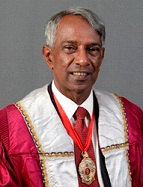
MBBS(Cey), DCH(Cey), DCH(Eng),
MD(Paediatrics), MRCP(UK), FRCP(Edin),
FRCP(Lond), FRCPCH(UK), FSLCPaed, FCCP, Hony.
FRCPCH(UK), Hony. FCGP(SL)
Specialist Consultant Paediatrician and Honorary Senior Fellow,
Postgraduate Institute of Medicine, University of Colombo, Sri Lanka.
An independent freelance medical correspondent.
It is a more than likely observation in this day and age, displayed as a scene that may be noted if one walks into a ward at any of the National Hospitals of Sri Lanka or any major Teaching Hospital. It is perhaps a sight that would look somewhat alien and unfamiliar to a doctor who graduated forty to fifty years ago.
Where once Senior Consultants stood surrounded by eager students scribbling furiously in notebooks, today’s clinical ward rounds are accompanied by glowing electronic tablet screens, instant smartphone access to medical databases, and digital reports downloaded from cloud servers. In some cases, before a young Medical Student or a junior doctor even reaches the patient’s bedside, they may already know the patient’s exact blood chemistry, genetic markers, and even three-dimensional cross-sectional images of the patient’s internal organs.
Medical Education in Sri Lanka, celebrated for over a century and a half since the founding of the Colombo Medical School in 1870, has undergone a profound transformation. The transition has been from the era of ink, paper, and physical signs to an age dominated by advanced imaging, high-throughput blood tests, the internet, and Artificial Intelligence (AI). It has brought unimaginable speed and electronic precision to modern healthcare. Yet for all that, as Sri Lanka’s medical faculties train the next generation of doctors, a vital question emerges: In our rush to embrace the digital future, are we losing the timeless and precious human art form that defined the great physicians of the past?
The Era of “Then”: The Sacred Art of the Bedside
To understand what has changed, one must travel back quite a few decades to even the 1970s and 1980s.
In those days, medical diagnostic equipment was sparse, expensive, and often unavailable outside major metropolitan centres. Computed Tomography (CT) scans were a rare luxury, Magnetic Resonance Imaging (MRI) was virtually unheard of locally, and ultrasound machines were in their infancy. There was no internet to search for rare syndromes, no AI to suggest differential diagnoses, and no automated laboratory machinery to return fifty blood values within an hour.
How, then, did the legendary medical teachers and consultants of that golden era diagnose complex, life-threatening illnesses with astonishing accuracy? The answers lay in two fundamental, painstaking skills: taking a detailed history from the patient and performing a thorough physical examination.
The Patient’s Story as the Guiding Compass
Decades ago, medical students were taught that 80 per cent of all diagnoses could be made simply by listening to the patient. History-taking was not merely ticking off a quick checklist of questions; it was an immersive, structured narrative art, delving deeply into many aspects of the patient’s life. Students were trained to stand at the edge of the hospital bed, look the patient in the eye, and let them tell their story. A doctor needed to know not only when the fever started or where the pain was, but also what kind of work the patient did, what they ate, the conditions of their home environment, their emotional worries, and their family background. Every word mattered. A subtle clue, such as a patient mentioning that her joint pain worsened in the cold morning dampness, or that a child’s cough grew louder after playing outdoors, could set off a train of clinical reasoning that pointed directly towards a diagnosis.
The Human Senses as Diagnostic Tools
Once the story was told, the physical examination began. Doctors of yesterday trained their own five senses to function like a living diagnostic laboratory:
=Observation (Inspection): Before touching the patient, the doctor observed everything. The colour and texture of the skin, the tint of the whites of the eyes, the subtle shaking of an outstretched hand, the shape of the fingernails, or the rhythm of breathing, all of which revealed volumes about the functioning of many organs.
=Touch (Palpation): Using their bare hands, physicians learned to feel the precise boundaries of an enlarged liver or spleen, gauge the temperature and texture of skin, and map out subtle muscle spasms or localised pain.
=Sound (Percussion and Auscultation): Tapping fingers against a patient’s chest wall produced distinct sound notes, dull, resonant, or booming, which allowed doctors to virtually “see” fluid in the lungs or air in the chest cavity without a single X-ray. Through the stethoscope, they listened for the delicate, rhythmic murmur of a leaking heart valve or the fine crackles of fluid in the lungs and airways, fine-tuning their ears to the sounds like gifted musicians.
The entire clinical encounter was documented by hand on paper in Bed-Head Tickets (BHTs). These handwritten records were masterpieces of clinical reasoning, clear, organised, and detailing the doctor’s step-by-step thought process from initial suspicion to even a final diagnosis.
The Era of “Now”: High-Tech, High-Speed Medicine
Now, let us go fast-forward to the present day. Today’s medical undergraduates and postgraduate trainees enter a medical world transformed by technological marvels. That transmuted scenario is unbelievable and almost too good to be true.
The internet gives students instant access to a wealth of medical journals, clinical guidelines, and global expert consensus statements at their fingertips. Artificial Intelligence tools can analyse electrocardiograms (ECGs) in seconds, flag abnormal lung nodules on chest X-rays, and cross-reference rare genetic mutations faster than any human mind ever could. Point-of-Care Ultrasound Scans (POCUS) plug into smartphones, allowing doctors to view heart valves in motion at the bedside within seconds.
This technological revolution has delivered undeniable benefits:
=Unrivalled Accuracy: Internal bleeding, microscopic tumours, and early-stage blockages that were once completely invisible to the human eye can now be detected electronically long before they cause obvious physical signs.
=Speed in Emergencies: In acute stroke, heart attacks, or severe trauma cases, automated scans and rapid blood tests save precious minutes that may mean the difference between life and death.
=Standardised Care: Digital protocols and evidence-based software guidelines help prevent human error and ensure that patients across different hospitals receive consistent, modern care.
However, this shift in the way the practise of medicine has progressed with the advent of tools with immense potential, has also delicately and subtly altered how we look after our patients and the way we get about in providing healthcare to our nation. We need to realise that it also has an interesting and intriguing flip side. There is no such thing as a free lunch. There are certain other factors that need to be taken into account as well.
The Hidden Costs of Digital Dependency
While no one would wish to return to an era without modern scans or life-saving tests, the growing reliance on technology in medical education has introduced some troubling side effects.
1. Treating the Screen; Not the Patient
In many busy modern hospital wards, a curious shift occurs. Young doctors often spend more time looking at computer screens, lab reports, and scan images than sitting at the patient’s bedside.
It has become tempting to order a battery of high-tech investigations right away and wait for the results, rather than spending 30 minutes taking a detailed history and performing a methodical physical examination. A patient may sit in a clinic room feeling largely ignored while the doctor punches data into a system or scrolls through digital files.
2. Withering of Clinical Skills
Physical examination is like a muscle: if you do not use it, it weakens. When every respiratory symptom immediately prompts a high-resolution CT scan, students risk losing the refined auditory skills required to detect early abnormal lung sounds with a stethoscope. When an echo machine is always nearby, the subtle physical signs of early heart disease can easily be missed or overlooked.
If young doctors rely entirely on machines to tell them what is wrong, what happens when those machines are unavailable?
3. The Challenge of Resource Constraints
Sri Lanka is a nation where healthcare resources are precious and somewhat unevenly distributed. While major teaching hospitals in Colombo, Kandy, Jaffna or Galle may possess state-of-the-art diagnostic machinery, smaller rural hospitals and peripheral clinics often operate with basic facilities.
Young doctors trained strictly to rely on immediate CT scans, complex blood panels, or specialised software will find themselves paralysed when posted to a remote rural clinic where even the electricity might fluctuate, and the nearest scanner is hours away. In such settings, clinical skills – the ability to diagnose using eyes, hands, stethoscope, and intellect, are not just academic traditions; it is a life-saving necessity.
What Today’s Trainees Can Learn from the Teachers of Yesterday
The goal of modern medical education should not be to reject new technology, but to ground it in the wisdom of the past. Senior Professors and Consultants who practised four to five decades ago possessed insights that remain deeply relevant for today’s medical undergraduates and postgraduate trainees too.
Here are four essential lessons that yesterday’s masters can teach today’s generation:
Lesson 1: History-Taking is an Act of Human Connection
Technology can analyse data, but it cannot empathise. When a doctor sits down, establishes eye contact, and listens patiently to a suffering fellow human being, two things happen: the doctor gathers vital clinical clues that no scan can reveal, and the patient feels cared for and understood.
The therapeutic value of listening is immense. Anxiety decreases, trust is built, and patients are far more likely to follow medical advice when they feel their doctor truly knows them as a person, not just a bed number or a case file.
Lesson 2: Physical Touch Builds Trust and Reveals Truths
The physical examination is a powerful bridge between doctor and patient. A reassuring hand on a pulse, a gentle examination of an aching joint, or a careful abdominal touch conveys warmth and competence.
Furthermore, physical signs often precede what machines detect, or explain discrepancies in test results. A doctor who masterfully detects early clinical signs can save the health system thousands of rupees in needless investigations and save the patient unnecessary anxiety.
Lesson 3: Technology should be a Servant: Not a Master
The great teachers of the past taught that investigations should be ordered to confirm a clinical suspicion, not to go about to find one blindly.
Today’s young doctors must learn to form a strong clinical hypothesis first, using their brain, history, and examination, before ordering tests. Falling into the debacle of subjecting a patient to a blanket set of tests without a clear idea of what one is looking for leads to over-testing, incidental false findings, unnecessary treatment, and wasted healthcare funds.
Lesson 4: Resilience and Resourcefulness
Medical Teachers from decades past worked through difficult times with limited resources, yet delivered exceptional care. They cultivated incredible resilience and mental agility. They learned to rely on core scientific principles, basic anatomy, and physiology to solve complex medical puzzles. Modern trainees who learn this mindset become adaptable, confident doctors who can excel anywhere in the world, from an advanced research hospital in London to a remote rural clinic in Monaragala.
The Golden Middle: Fusing Bedside Art with Digital Science
Medical education in Sri Lanka stands at a vital crossroads. We do not need to choose between the past and the future; the true path forward lies in combining the best of both worlds.
Imagine a medical graduate who possesses the deepest empathy, sharp observational skills, and clinical acumen of a 1980s consultant, seamlessly combined with the ability to interpret cutting-edge AI algorithms, read complex MRI scans, and utilise the latest medical research available online. That is the ideal physician for Sri Lanka’s future. It is a medical professional:
=who uses AI as an assistant, but trusts their own trained senses at the bedside.
=who reviews the digital scan, but never forgets to look at, speak to, and touch the human being sitting in front of them.
=who writes clear, thoughtful clinical notes, whether on paper or on a screen, reflecting a mind that truly understands the patient’s story.
The Unchanging Heart of Medicine
Languages change, medical curricula may evolve, and diagnostic tools will continue to grow more sophisticated with every passing decade. Tomorrow’s doctors may well work alongside AI systems that predict illnesses before symptoms even appear. Yet for all that, and despite these changes, the fundamental essence of medicine should remain unchanged. That is the scholarly and empathetic bond between the patient and the treating physician; the hallowed Doctor-Patient relationship.
When a person falls ill, he or she does not seek a connection with a computer screen, a lab machine, or a diagnostic algorithm. They seek a caring human doctor; someone who possesses both the scientific competence to diagnose their illness and the humanoid warmth to comfort their pain and anxiety. By honouring the timeless bedside arts of yesterday while mastering the modern tools of today, Sri Lanka’s medical students and young doctors can ensure that our nation’s proud medical tradition continues to shine ever so brightly for generations to come. It would produce a set of medical professionals who really care and are so competent that suffering mankind would be the ultimate beneficiaries.
from The Island https://ift.tt/c4ASMQX

No comments:
Post a Comment